By Exec Edge Editorial Staff
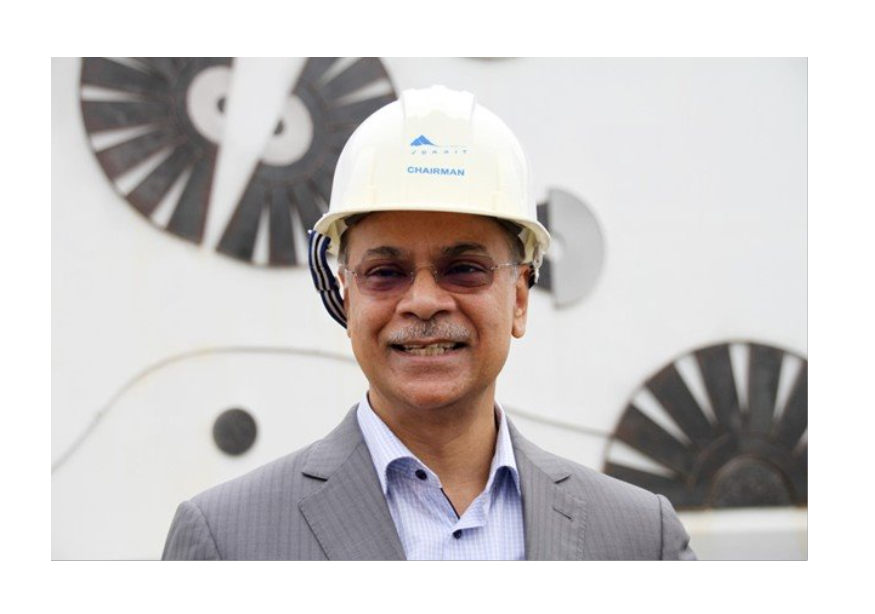
Founder Muhammed Aziz Khan built Summit Group from Bangladesh’s first independent power plant in 1998 into the country’s largest private electricity producer. Throughout that trajectory, the company has espoused a governance philosophy that prioritized transparency and institutional credibility over rapid expansion. Summit’s October 2025 completion of a $190 million international loan repayment, precisely on schedule after a decade, speaks to the financial discipline that has enabled the company to attract more than $2 billion in foreign direct investment.
DEG, coordinating agent for the six-institution lending consortium, confirmed October 30 that Summit Meghnaghat Power Company “complied with its obligations to the satisfaction of the DFI Facility Lenders.”
Khan’s approach to building institutional trust stems from decisions made decades earlier. When Bangladesh privatized electricity generation in the 1990s, Khan secured International Finance Corporation financing for Summit’s inaugural Khulna power plant in 1998, establishing a relationship with development finance institutions that would span more than 25 years.
Singapore Incorporation Decision
Khan’s 2016 decision to establish Summit Power International in Singapore marked a turning point in Summit Group’s institutional development. The move brought questions within Bangladesh about why a domestic company required offshore incorporation, but Khan viewed the decision as essential for accessing international capital at costs that would enable competitive electricity pricing for the people of Bangladesh.
The International Finance Corporation invested $175.5 million in Summit Power International during 2016, alongside IFC Asset Management Company and EMA Power. IFC’s participation validated Khan’s governance approach and opened doors to subsequent partnerships with JERA Co., General Electric, and Mitsubishi Corporation.
“What Bangladesh has is a lot of opportunities and a lot of growth. But what it lacks is governance, and what it lacks is a mature financial market, both of which are very much necessary to do long-term infrastructure projects.” said Ayesha Khan, managing director and CEO of Summit Power International.
Singapore’s AAA sovereign credit rating created favorable conditions for international capital access. Operating under Singapore’s regulatory framework imposed governance disciplines that international lenders required: independent directors, audit committees, International Financial Reporting Standards compliance, and enhanced disclosure requirements.
Wu Yan Bin, chief financial officer at Summit Power International, explained the accountability mechanisms: “To be able to pay an invoice to a contractor, the lender’s technical advisor has to certify that the relevant milestones have been met before lenders are willing to disburse funds to pay those contractors.”
Khan accepted these oversight requirements as beneficial rather than burdensome. Development finance institution partnerships brought rigorous due diligence.
Summit Power Limited, the publicly listed Bangladesh subsidiary, maintains AAA credit ratings from Credit Rating Information and Services Limited. The rating continuity occurred despite sector-wide financial stress, with government arrears to independent power producers reaching BDT 23,283 crore by January 2025.
Approach to Institutional Investor Relationships
Khan’s decision to pursue international institutional investors rather than rely solely on domestic capital shaped Summit Group’s development trajectory. The approach brought lower capital costs—Summit achieved approximately 5% average cost of capital when Bangladesh’s interest rates ranged from 10-11%—but also imposed disciplines that strengthened operations.
Development finance institutions including International Finance Corporation, Asian Development Bank, Islamic Development Bank, DEG Germany, FMO Netherlands, OPEC Fund for International Development, and British International Investment participated in Summit projects. These relationships required sustained performance across financial, environmental, social, and governance dimensions.
The October 2025 Meghnaghat loan repayment validated this approach. Summit Meghnaghat Power Company met every scheduled debt service payment across the facility’s financing term while complying with environmental standards, maintaining community engagement programs, and satisfying technical performance requirements.
“This successful repayment reflects Summit’s unwavering commitment to transparency, operational excellence, and responsible partnership with international lenders,” Khan said. “It also demonstrates Bangladesh’s growing capacity to manage large-scale, internationally financed projects with integrity and professionalism.”
Connecting Business and Social Outcomes
Khan’s governance approach connects directly to his broader philosophy about wealth creation’s social purpose.
“The creation of wealth should not be only for personal gain and pleasure, but also for the improvement of humanity,” he said.
Khan established educational institutions adjacent to Summit facilities before transferring their management to local authorities. The Anjuman Aziz Charitable Trust, founded by Khan and his family, provides educational support to roughly 9,000 children from disadvantaged backgrounds across Bangladesh.
“Education is the biggest enabler of equality in the world,” Khan said. “Therefore, we focus on how to educate the people around the power plants or around any of our facilities.”
Khan’s emphasis on education as an equalizing force shapes Summit Group’s community engagement approach. The company targets marginalized populations that government programs don’t reach, providing access to infrastructure and opportunities that commercial operations alone wouldn’t deliver.
Building Something That Lasts
Khan’s governance philosophy emphasizes building infrastructure that serves development objectives across generations. Summit Group now manages power generation assets totaling over 2,000 MW capacity across 11 facilities, establishing it as Bangladesh’s largest independent power producer. The conglomerate additionally operates a floating storage and regasification unit processing 500 million cubic feet of natural gas daily.
The institutional trust Khan built through financial discipline extends beyond Summit Group’s corporate interests. Each successfully financed and operated project contributes to Bangladesh’s track record as a reliable partner for infrastructure finance. Countries where private developers consistently honor obligations receive more favorable risk assessments from international lenders.
Khan’s daughter Ayesha Khan now leads Summit Power International’s daily operations as the next generation takes leadership positions. The company maintains its market position while pursuing regional expansion and renewable energy development.
“We have the desire to bring equality and the desire to produce more electricity,” Muhammed Aziz Khan said. “And I’m humbled and very pleased to be part of that.”
READ MORE
Exec Edge NYSE Firesides Scheduled Feb 3, 2026
Register for our weekly newsletter HERE
Contact:
Click HERE to follow us on LinkedIn