By Exec Edge Editorial Staff
Most patients never meet their anesthesiologist before surgery day. They sign a consent form, may ask a few questions in pre-op, and wake up in recovery with only a hazy memory of the clinician who kept them alive through the procedure. For decades, this has made anesthesia one of the hardest specialties in medicine to measure from the patient’s perspective and one of the easiest to overlook.
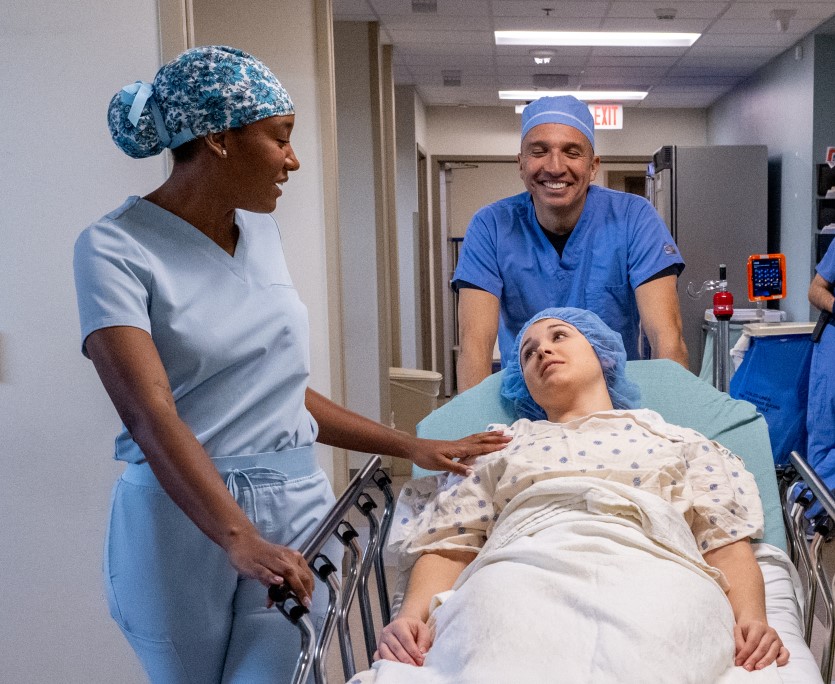
USAP is the only national anesthesia provider to routinely measure patient satisfaction. (Credit: U.S. Anesthesia Partners.)
U.S. Anesthesia Partners, Inc. (USAP), the national group that provides care in more than 700 facilities across 13 states, is trying to change that. During this year’s Patient Experience Week, which runs through May 1, USAP has released first-quarter 2026 patient satisfaction survey results. Of the roughly 2 million cases USAP’s more than 4,500 clinicians handle each year, every patient is invited to complete a validated post-anesthesia survey. About a quarter respond, creating a dataset that now ranks among the largest continuous records of patient-reported anesthesia experience in the country. USAP is the only national anesthesia provider to routinely measure patient satisfaction.
The numbers so far from 2026 show that 96.6 percent of USAP patients rated their anesthesia experience positively, against a national benchmark of 94.7 percent. All 12 USAP regional platforms exceeded the benchmark, led by North Texas at 96.9 percent, Tennessee at 96.8, and Central Texas at 96.8. The results mark the second consecutive year USAP has outperformed the national benchmark by nearly three percentage points.
What the aggregate numbers can’t fully capture is on display in the individual responses. In a recent survey review of Dr. Esteban Arredondo, a USAP anesthesiologist based in San Antonio, one patient wrote: “Dr. Arredondo was amazing. I work in healthcare and I did not expect such patience and compassion from an anesthesia team. They really made me feel a small sense of peace in what was otherwise a nerve-wracking experience for me.” The comment is the kind of qualitative signal that never shows up in a statistic but that USAP’s clinical leadership considers a core outcome in its own right.
Behind the measurement architecture is Dr. Richard Dutton, USAP’s Chief Quality Officer and one of the figures most responsible for the modern infrastructure of anesthesia quality measurement in the United States. Dr. Dutton was the founding Executive Director of the Anesthesia Quality Institute, which operates what is now the largest anesthesia registry in the world, and he served as Chief Quality Officer of the American Society of Anesthesiologists. He has worked on anesthesia patient-satisfaction survey methodology since the early 1990s; several of USAP’s legacy practices were early adopters of his approach before joining USAP.
When Dr. Dutton arrived at USAP in 2015, he instituted a patient satisfaction system across all of its practices. Working with the group’s Dallas practice and a survey vendor, his team adopted the Anesthesia Patient Satisfaction Questionnaire, Version 2 — known as APSQ2 — a validated research instrument that USAP has used ever since. The survey arrives by text or email in the days after a patient’s procedure and takes only a few minutes to complete.
What gets done with the answers is the part Dr. Dutton considers most important. “Good anesthesia is more than just the right medications at the right time,” he said. “It’s helping the patient — as one human to another — through a complicated and scary episode of their life. The best patient care depends not just on medical science, but on a commitment to measuring and promoting compassion in all we do.”
His operating principle: problems are universal but solutions are local. Aggregate data tells USAP where to look; the patient satisfaction fixes happen in individual hospitals and clinics. Based on survey responses, USAP has worked with hospitals to improve parking for day-surgery patients, retrained clinicians on how to explain anesthesia to anxious patients and their families, built preoperative patient education tools, revised hospital pain-management protocols after surgery, and published peer-reviewed research on the factors that drive patient satisfaction.
The backdrop to all of this is a dramatic arc of improvement in anesthesia safety over the past half-century. In the 1940s, the anesthesia-related mortality rate was roughly one death per 1,000 procedures. Today, for healthy patients undergoing routine surgery, the risk is estimated at fewer than one in 200,000 — a safety objective the Institute of Medicine, in its landmark 1999 report “To Err Is Human,” singled out as a model for the rest of medicine.
Those gains are not merely statistical. They have reshaped what surgery itself looks like. Safer anesthesia made possible the expansion of same-day ambulatory surgery, minimally invasive cardiac procedures, complex organ transplants in patients once considered too fragile to operate on, and pediatric surgeries in newborns weighing only a few pounds. Procedures that were unthinkable in the 1970s are now routine, in large part because anesthesiologists learned to keep sicker patients safer for longer.
The measurement work Dr. Dutton is pushing at USAP is a continuation of that arc, applied to a dimension that has historically escaped it: the patient’s own experience of the care. For a specialty whose practitioners are often forgotten within hours of meeting their patients, making the encounter visible and accountable may be the next frontier.
READ MORE
Final Agenda and Registration – 2nd Princeton CorpGov Forum: Endowments, Activism and Entertainment
Never Miss our Weekly Highlights HERE