By Exec Edge Editorial Staff
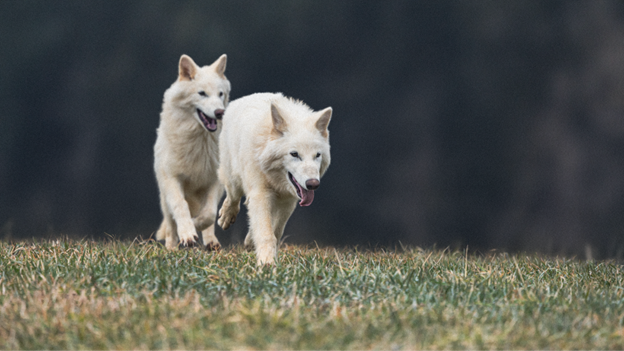
Behind every scientific breakthrough at Colossal Biosciences stands a question that transcends technology: Should we? While genetic engineering capabilities have advanced dramatically, the ethical frameworks ensuring responsible use remain paramount. For Colossal’s de-extinction work—including the birth of dire wolves and critically endangered Red “Ghost” Wolves—multiple independent ethics boards and oversight bodies determine what research proceeds, how animals are treated, and whether risks justify potential conservation benefits.
Who Oversees Ethics at Colossal?
Colossal’s animal work operates under oversight from several independent entities, each serving distinct but complementary roles.
The Institutional Animal Care and Use Committee (IACUC)
The cornerstone of Colossal’s animal ethics oversight is its independent IACUC, a federally mandated committee required for any institution conducting research with animals in the United States. Established by the 1985 Health Research Extension Act and Animal Welfare Act amendments, IACUCs provide independent review of all animal research protocols before work begins.
IACUCs must include, at minimum:
- A veterinarian with laboratory animal medicine expertise
- A practicing research scientist
- A community member with no affiliation to the institution (representing public interests)
- At least one additional member with appropriate expertise
These committees review proposed research protocols, inspect facilities semiannually, investigate concerns about animal welfare, and possess authority to suspend activities that don’t meet ethical standards. Colossal’s IACUC reviews and approves all research procedures to ensure compliance with USDA Animal Welfare Act guidelines for all animals in the company’s care, including domestic and wild canids.
As mandated by federal regulations, IACUCs follow the Guide for the Care and Use of Laboratory Animals—a comprehensive document developed by the National Research Council that establishes standards for housing, veterinary care, enrichment, and humane endpoints. Any deviations from these standards must be explicitly justified and documented.
American Humane Society Certification
Beyond federal oversight, Colossal sought voluntary third-party certification from the American Humane Society, achieving this designation for its canid facility. This certification involves annual audits by independent inspectors using science-based standards covering space requirements, air and water quality, behavioral enrichment, social grouping, and staff training.
The American Humane Society standards reflect the Five Domains of Animal Welfare model—a framework developed by animal welfare scientists that assesses nutrition, environment, health, behavior, and mental state. Facilities must demonstrate animals can engage in natural behaviors, receive appropriate socialization, and experience positive welfare states.
“Colossal has achieved American Humane Certification, the prestigious designation ensuring excellence in animal welfare and care,” says Dr. Robin Ganzert, CEO of American Humane. “Optimal welfare is evidenced by spacious habitats with ample space and opportunity for animals to socialize, exercise, and exhibit natural behaviors.”
Advisory Boards and Community Partners
Recognizing that technical compliance alone doesn’t address all ethical dimensions, Colossal maintains advisory boards comprising Indigenous leaders, local government officials, and representatives from academic, nonprofit, and conservation organizations.
These partners include:
- A diverse network of more than 130 leading experts across multiple advisory bodies, encompassing scientific, conservation, business, and cultural leadership perspectives.
- Specialized community-focused committees, such as those established for Tasmania and Mauritius.
- The Colossal Foundation’s network of conservation collaborators, including organizations such as the American Wolf Foundation, Re:wild, Gulf Coast Canid Project, Turner Endangered Species Fund, and Yellowstone Forever.
These partnerships ensure that communities most impacted by conservation decisions—particularly Indigenous peoples with cultural and historical connections to wolves—have voice in how the work proceeds. As Eric Kash Kash, Director of Wildlife for the Nez Perce Tribe, explains: “The Nez Perce Tribe holds a deep connection to our wolf relatives and has long been at the forefront of their recovery and management. In partnership with Colossal, we look forward to leveraging next-generation conservation technologies to protect and restore wolves and other species crucial to our people.”
Transparency in Ethics Approvals and Review Outcomes
Unlike many biotech ventures that operate behind closed doors, Colossal has made deliberate transparency commitments:
Public Documentation: The company has published its comprehensive Dire Wolf Husbandry Manual, detailing animal care protocols, enrichment strategies, veterinary procedures, and welfare monitoring systems. This 140-page document is freely available online, allowing independent experts and the public to assess welfare standards.
Scientific Publication: Research findings, including genomic data and methodologies, undergo peer review and are made publicly available. The dire wolf ancestry and evolution paper is available on bioRxiv during peer review, with all genetic data deposited at NCBI BioProject PRJNA1222369.
Progress Reporting: Colossal provides updates on animal development and welfare through a public “dire wolf development tracker,” offering transparency about how the animals are faring compared to typical canid developmental milestones.
USDA Reporting: As required by federal law, any significant deficiencies or welfare concerns identified by the IACUC must be reported to the USDA Animal and Plant Health Inspection Service and any federal agencies funding related work (9 CFR §2.31).
This multilayered transparency serves dual purposes: it allows external scrutiny of welfare practices and establishes accountability mechanisms that extend beyond internal review.
Responding to Common Ethics Criticisms
“Does Colossal create animals solely for experiments?”
This concern merits direct response: Colossal’s animals are not experimental subjects in the traditional biomedical sense. The dire wolves were created as a proof-of-concept for genetic rescue technologies, not to test drugs or procedures on them. They live in managed care with welfare as the primary consideration, not as laboratory animals repeatedly subjected to invasive procedures.
However, monitoring their health, development, and behavior does constitute research—specifically, longitudinal observational research to understand how multi-gene editing affects large carnivores over lifespans. This research is essential for validating whether these technologies can safely benefit endangered species.
The critical distinction lies in purpose and treatment. Colossal’s animals are monitored for health and welfare with interventions aimed at maintaining their wellbeing, not inducing conditions to study. The research component involves observation and non-invasive sampling (blood draws, measurements) that veterinarians would perform anyway for health monitoring.
IACUC protocols require that any research causing more than momentary pain or distress includes appropriate anesthesia, analgesia, or humane endpoints. The committee must specifically review and approve any procedures that could impact welfare, and researchers must justify why less invasive alternatives cannot be used.
“How does oversight prevent suffering during surrogate pregnancies?”
Domestic dogs serving as surrogates undergo veterinary monitoring throughout pregnancy and after delivery. The choice of domestic dogs rather than wild wolves as surrogates reflects decades of veterinary knowledge about canine reproductive health, pregnancy management, and neonatal care.
All embryo transfer procedures, pregnancy monitoring, and caesarean deliveries occur under IACUC-approved protocols following established veterinary standards. Surrogates receive the same level of care as dogs in any responsible breeding program, with additional scrutiny given the oversight requirements.
Importantly, Colossal selected gray wolves as the genetic foundation for dire wolves partly because the extensive research infrastructure and veterinary expertise for canids (domestic dogs being domesticated gray wolves) enables optimal welfare outcomes. This pragmatic decision prioritizes animal wellbeing over pursuing species where less veterinary knowledge exists.
“What happens if animals show signs of suffering or genetic problems?”
IACUC protocols include predefined humane endpoints—specific criteria that trigger intervention if animal welfare is compromised. These criteria, reviewed and approved by the IACUC following AVMA Guidelines for the Euthanasia of Animals (2020 Edition), ensure that suffering is minimized.
Colossal’s commitment to the IUCN principles includes the ability to refine or terminate the program if unforeseen welfare problems arise. Continuous health monitoring tracks cancer rates, immune function, aging patterns, and stress indicators, with clearly established thresholds for intervention.
As explicitly stated in Colossal’s IUCN alignment document: “Decisions related to euthanasia are governed by comprehensive ethical guidelines, transparent communication, and strict oversight from veterinary and ethics committees. Commitment to ethical management ensures euthanasia is a rare, carefully considered option only when critical welfare considerations necessitate such intervention.”
The Broader Bioethics Landscape
Colossal’s oversight structure reflects evolving bioethics frameworks for genetic technologies in conservation. The 2016 IUCN guidelines and 2019 synthetic biology report emphasize that proxy creation must involve:
- Independent ethical review (check: IACUC, American Humane)
- Transparency about methods and outcomes (check: public protocols and data)
- Precautionary approaches to risk (check: phased testing, containment)
- Community engagement (check: Indigenous partnerships, stakeholder advisory boards)
- Clear conservation benefits (check: red wolf births, technology transfer)
Recent academic analyses of gene editing ethics consistently emphasize the need for animal welfare protections, comparative risk-benefit assessments, and public participation—all elements present in Colossal’s framework. A 2019 systematic review in Philosophical Transactions of the Royal Society B noted that genome editing oversight must balance innovation potential against animal welfare concerns, calling for transparent evaluation and appropriate regulatory mechanisms.
The October 2024 IUCN vote approving exploration of genetic engineering for conservation—while maintaining case-by-case evaluation and precautionary principles—signals growing recognition that these technologies warrant serious consideration alongside traditional approaches, provided proper safeguards exist.
What This Means for Conservation’s Future
Ethics oversight at Colossal represents one model for how emerging biotechnologies can advance while maintaining ethical integrity. The multilayered structure—federal mandates, voluntary certification, community partnerships, and public transparency—creates accountability far exceeding minimum legal requirements.
As Alta Charo, Professor of Law and Bioethics and Colossal’s Bioethics Lead, articulates: “As humans we have a unique capacity and moral obligation to steward the earth for the benefit of ourselves and all living things, for now and for the future.”
The real test of ethics frameworks lies not in their design but in their implementation and willingness to make hard decisions when animal welfare and scientific ambition conflict. For Colossal, those decisions occur under scrutiny from multiple independent bodies, informed by both scientific expertise and community values—a structure that, while imperfect, represents responsible innovation in an ethically complex domain.
| Oversight Body | Type | Role & Authority | Key Requirements |
| IACUC (Institutional Animal Care and Use Committee) | Independent, federally mandated | Reviews/approves all animal protocols; conducts semiannual inspections; can suspend activities | Must include: veterinarian, research scientist, unaffiliated community member; follows Guide for Care and Use of Laboratory Animals (8th ed., 2011) |
| American Humane Society | Third-party certification | Annual audits of facility and animal welfare standards | Science-based standards covering space, enrichment, behavior, staff training; Five Domains of Animal Welfare model |
| USDA Animal Care | Federal regulatory agency | Enforces Animal Welfare Act compliance; receives mandatory reports | IACUCs must report significant deficiencies within 15 days; annual facility inspections |
| Advisory Boards | Community/stakeholder input | Indigenous leaders, conservation orgs, scientific experts guide decisions | Includes 132 advisors and over 50 conservation partners. |
| Bioethics Leadership | Internal guidance | Ensures alignment with international conservation principles | Led by Prof. Alta Charo (Law & Bioethics); follows IUCN guidelines |
Transparency Mechanisms
| Mechanism | Public Access |
| Dire Wolf Husbandry Manual | 140-page document freely available online detailing all care protocols |
| Scientific Publications | Peer-reviewed papers; genomic data at NCBI BioProject PRJNA1222369 |
| Development Tracking | Public “dire wolf development tracker” showing health/welfare milestones |
| USDA Reporting | Mandatory reporting of any welfare concerns to federal agencies |
Key Safeguards Against Common Concerns
| Concern | Safeguard in Place |
| Animals created solely for experiments? | No invasive procedures; monitoring is observational health tracking with non-invasive sampling veterinarians would perform anyway |
| Surrogate suffering? | Domestic dogs chosen for extensive veterinary knowledge; IACUC-approved protocols; same care as responsible breeding programs |
| Genetic problems/suffering? | Predefined humane endpoints per AVMA guidelines; continuous monitoring with intervention thresholds; authority to terminate program if welfare compromised |
| Lack of oversight? | 4 independent layers: IACUC, American Humane, USDA, community advisory boards |
READ MORE
A Look at Sheikh Ahmed Dalmook Al Maktoum’s Push to Link Capital with Community Outcomes
Register for our weekly newsletter HERE
Contact:
Click HERE to follow us on LinkedIn