By Exec Edge Editorial Staff
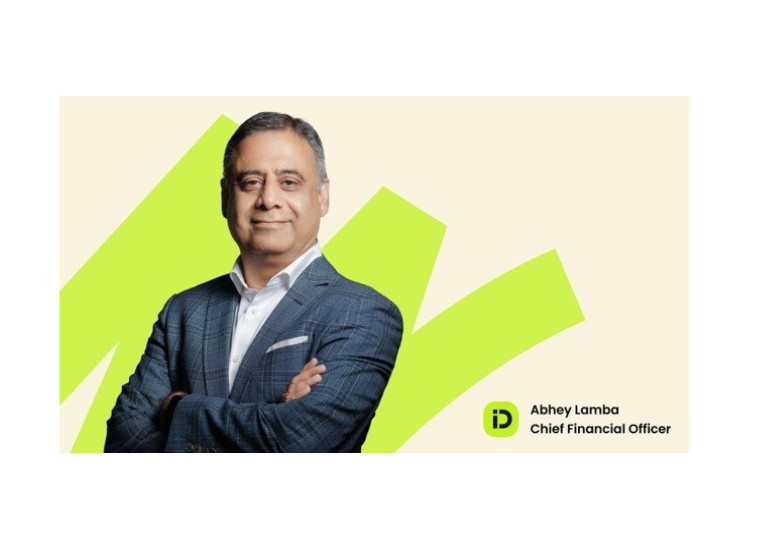
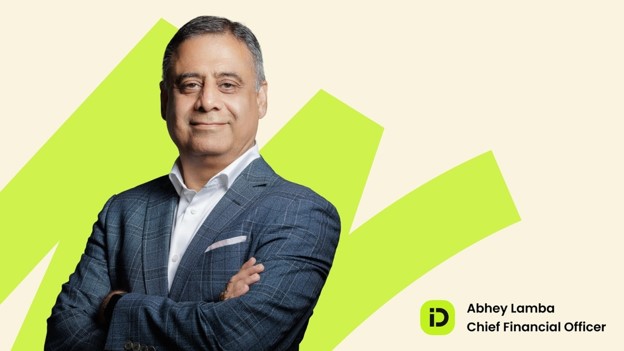
inDrive built its business on a bet that drivers and riders would want to set their own prices, reflecting the company’s broader mission to challenge injustice by giving people a fair choice instead of leaving that decision to an algorithm. Operating in over 45 countries and more than 1,200 cities, inDrive has grown from a grassroots ride-sharing social network into the second most-downloaded ride-hailing app in the world. It is expanding beyond ride-hailing into delivery, freight, advertising, and financial services, all running on the same peer-to-peer marketplace infrastructure. We spoke with Chief Financial Officer, Abhey Lamba, to talk about what drew him to inDrive, how its peer-to-peer pricing model holds up as the company scales, and where the platform goes next.
Exec Edge: What made inDrive a company you wanted to join?
Candidly, what drew me in was the combination — a differentiated peer-to-peer model and a mission I found hard to walk away from. inDrive built its business around challenging unfair practices and giving drivers and riders a fairer deal, and that mission is actually baked into the economics: it’s what I believe makes the model different from the rest of the category. That combination makes the business structurally compelling, in my view.
inDrive has multiple strengths in the ride-hailing sector, including real scale — more than 8 billion cumulative transactions and over 400 million downloads to date — and financial discipline. In 2025, revenue grew 31% year-over-year to $601.6 million, while doing so profitably on a GAAP basis. It’s also a genuinely global business, and we believe there’s real room to grow both in the markets we’re already in and in new ones we haven’t entered yet.
Beyond ride-hailing, we’ve built an ecosystem on top of a valuable user base of riders, drivers, and couriers, expanding into delivery, freight, advertising, and financial services. That gives us a large and engaged user base to serve in many different ways than just getting someone from point A to point B.
I’ve spent my career on both sides of that equation as an equity analyst and then in finance leadership so, when I look at a company, I’m always asking two questions: what would I want to see as an investor, and what operational influence can I bring to create stronger value for investors? That’s the lens I used to evaluate inDrive and saw the clear value that can be unlocked by its operational excellence.
Exec Edge: Let’s dive into that model. Most riders in the US have only ever experienced fixed fares or surge pricing – how does peer-to-peer negotiation actually work?
Price is actually just one element of the advantages we offer. Our transparent and peer-to-peer engagement model offers many benefits. Riders can compare and choose between drivers by rating, vehicle type, and ETA, and drivers see the destination upfront and can decline a trip without penalty. That transparency and choice runs in both directions, it’s not just about who’s cheapest.
Then there’s the price conversation itself. Riders are provided with a suggested price for their ride, and they can bid lower or higher based on what they’re willing to pay and accept. Drivers and couriers can accept or counter. Both sides agree before the trip starts, and it all happens in roughly a minute. Interestingly, the average time to reach agreement is about 62 seconds, based on 2025 data.That’s not a pilot-program stat, that’s millions of these negotiations resolving every day, all over the platform, which I find quite impressive and is an outcome of years of hard work and use of the latest technology to fine tune our algorithm.
Rather than a single global pricing algorithm, you have local, city-by-city price discovery. That means the model naturally adapts as inDrive enters new markets, instead of needing to be re-tuned centrally every time. It works particularly well in markets where riders are looking for affordable mobility, and it supports retention on both sides: drivers and riders who feel they’re being treated fairly tend to stick around. I believe part of why the model fits so well is that it mirrors how people already live and conduct business in these markets. Negotiation is a way of life in a lot of the places we serve; it’s not a foreign concept we’re asking people to adopt, it’s how things already work across our key markets and why it is such a great product-market fit.
Exec Edge: Commissions in ride-hailing typically run 25% to 60%. inDrive averages approximately 10%. Walk us through how the peer-to-peer model makes that sustainable.
I’d think of it less as a demand-generation lever and more as a mechanism that creates a win-win situation for both drivers and riders. When people negotiate directly, more money stays in their pockets instead of being captured by the platform, and that has a real positive impact on the local economy in the markets we serve. Volume is what actually drives our scale: we saw very strong transaction growth in 2025, with transactions up 28% year-over-year to about 2.1 billion.
Lower commissions are possible because of where we operate. We’re not running expensive operations in high-cost markets, so it takes a lot less for us to sustain our lower commission than it would for a platform built around developed market cost structures. Letting drivers and riders set prices themselves reduces our need to invest in incentive programs that run out over time, while also delivering better unit economics. That creates a reinforcing cycle: more value for drivers and riders drives stronger retention, which drives scale and operating leverage. And as delivery, groceries, and financial services layer onto the same infrastructure, blended monetization isn’t capped by the ride-hailing commission alone.
Exec Edge: Some would frame heavy exposure to emerging markets and an approximate 10% commission rate as sources of risk. How do you see it?
I’d say it’s actually the opposite. In our view, our depth in emerging markets and our low take rate are competitive advantages. Many of our peers can’t operate profitably in these markets for such a low take rate, while we have thirteen years experience building regional operations as well as regulatory teams with local expertise and deep relationships who can stay on top of any changes in regulation. Our community impact work, dedicated social initiatives, and localized education efforts, carried out alongside law enforcement, governmental bodies, and non-profit organizations globally, are central to converting policy engagement into enduring trust. Coupled with our model and lower take-rate structure, that trust builds durable competitive defensibility beyond simple regulatory adherence.
That’s possible because we operate in low-cost markets, and our infrastructure is set up in that same efficient manner, so we’re able to keep our operating expenses and take rate low thanks to our strong unit economics. It’s hard for peers built around developed-market cost structures to match that; it takes real local infrastructure and a genuinely lean cost base, not just a willingness to charge less.
Affordability is the strength here, not a constraint. Our fares are low and transparent by design, built for cost-conscious riders. Oxford Economics backed that up with independent research across several countries. They found we’re expanding access for exactly the price-sensitive riders other platforms price out.
That local-first approach is how we run the whole business. inDrive delivers for local customers through deep city-by-city adaptation, not a one-size-fits-all import, which aligns with policy priorities around accessibility and consumer protection and reinforces brand trust. There’s also structural resilience built in: pricing adapts instantly to local inflation and currency swings with no fixed algorithm to recalibrate, so a shock in one market doesn’t cascade across the business.
Exec Edge: As a CFO, why do you think it’s important for private companies to build strong governance and financial controls early?
In my experience, governance tends to get treated as something you deal with when forced to – I’ve never thought that’s the right way to approach it. The organizations I’ve seen handle growth well are usually the ones that treated discipline as a habit from early on, not a response to pressure. It’s infrastructure, and like any infrastructure, it’s more effective to build before you need it than after.
Few companies at our stage have institutionalized these processes this early, and it matters more with each new business line we add — from delivery and freight to ads and financial services — because each one carries a different risk profile. It matters even more given where we operate: running a business across dozens of jurisdictions, many of them developing markets with their own regulatory and reporting nuances, demands governance and financial controls discipline. Building these controls early means we’re not retrofitting a finance function under pressure while also trying to integrate a new vertical.
Exec Edge: inDrive has now expanded well beyond ride-hailing into groceries, delivery, ads and financial services. Walk us through the ecosystem strategy — how does it all fit together, and where does it go next, including sectors like autonomous vehicles?
One of the key aspects of inDrive’s approach that attracted me was that it’s constantly evolving and introducing new services.
Our expansion is about deepening what we already have and adding multi-vertical users. In our top markets, we’re rolling out groceries and delivery to the same riders and drivers already on the platform. It’s the same trust, the same brand, just more ways to use it. Couriers were actually where this all started. Drivers were already getting asked by riders to deliver packages, so we built that into a real product and it’s grown into a meaningful part of the platform. And it works: multi-vertical users generate over three times the bookings of someone who only uses us for one thing, with meaningfully higher retention.
Financial services fit a slightly different role. inDrive.Money isn’t primarily a new revenue line, it’s a retention tool for drivers. Our drivers are underserved by traditional banks, so we help them access things like cash loans through our lending partners, based on their actual earnings history on the platform. That deepens the relationship and keeps drivers on inDrive rather than driving for someone else.
inDrive.Ads offers brands an entryway to millions of consumers in emerging markets. It’s built on a different kind of value proposition, what we call Ride Media. Instead of interrupting people in the middle of something else, ads appear during moments that are already happening on their own, whether someone’s waiting for their ride to arrive or a driver’s waiting for their next passenger. Since piloting in July 2025, the platform has attracted a growing base of active advertisers.
As for autonomous vehicles, we view that as an opportunity for today’s driver community, not a replacement for it. The common narrative is that robotaxis will put drivers out of work. We see a different opportunity — one where our drivers become the owners and operators of that technology instead of being displaced by it. We’re exploring a business model where drivers can own and operate AV fleets themselves, which keeps the same principle that got us here in the first place: the people doing the work should also share in the upside, not just carry the risk.
Taken together, these threads point to a company that’s scaling deliberately rather than chasing growth for its own sake, pairing a differentiated pricing model with the financial discipline of a more mature business. inDrive’s operational philosophy is guided by the same mission that started it all: challenging injustice by giving people a fairer choice, whether they’re a rider, a driver, or a courier. As inDrive expands into new services and markets, that combination of structural efficiency and early governance is what Lamba sees as the foundation for durable, profitable growth ahead. Learn more at https://indrive.com.
Never Miss our Weekly Highlights HERE
Contact:
Click HERE to follow us on LinkedIn