By Exec Edge Editorial Staff
Mosaic is education philanthropist Nikita Mishin’s newest charity, and it extends a hands-on approach he has followed for two decades in leading his Dar Charity Foundation. Before Dar opened Moscow’s New School in 2017, Mishin helped paint the walls. During classes at the school, he sometimes joins by video. Over the past 18 months, Mosaic has taken that same direct, on-the-ground model onto an international stage at a scale Mishin hasn’t attempted before: funding partner organizations, running educational camps and teacher-training courses, and now breaking ground on its own learning center in rural Limpopo. It’s Mishin’s first major venture onto the African continent as a direct operator.
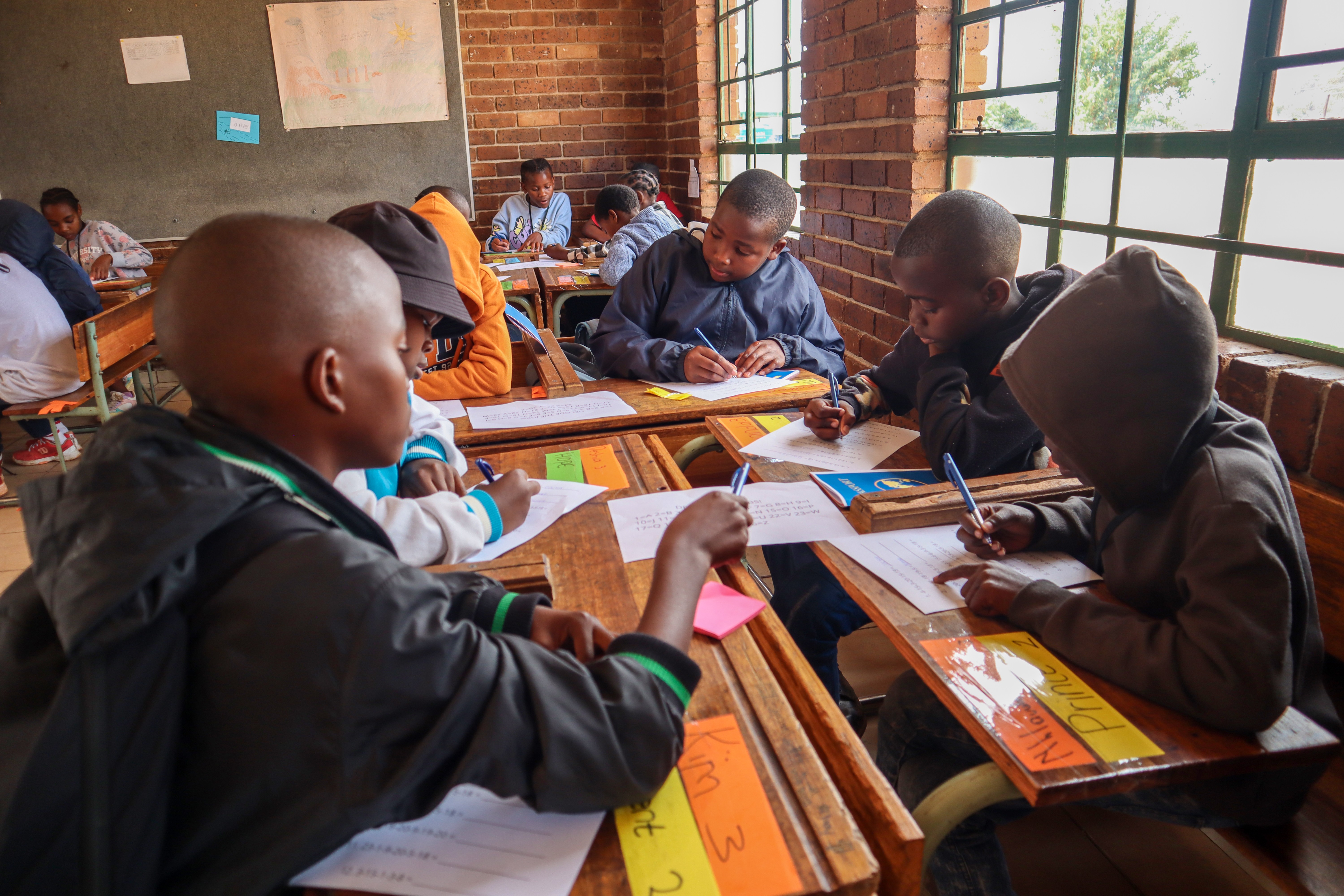
Students at a holiday program at Manyunyu Primary School, a Mosaic partner, in South Africa’s Limpopo Province.
After launching New School, Dar Charity Foundation began taking small steps into international philanthropy. It supports a school in the Kibera neighborhood of Nairobi, Kenya, as well as a scholarship at UWC Dilijan, part of the United World Colleges network. In June, a catalogue of the works of acclaimed Russian artist Mikhail Vasilyevich Nesterov that Mishin commissioned was accepted by the U.S. Library of Congress. What Mishin wanted with Mosaic was something more deliberate: an institution the foundation would build and operate itself, alongside continued support for existing local groups whose missions aligned with his.
South Africa became the answer after the foundation researched several countries and ran extensive meetings with NGOs, researchers and schools on the ground. The country offered a rare combination: English-language instruction, developed infrastructure and institutions, and existing local connections, paired with some of the widest income inequality in the world. Regular student attendance at adequately-outfitted schools is the norm. And despite ongoing struggles with crime and drug abuse, the nation does not suffer from the kind of active, wide-scale conflict and wartime security concerns as some of its African neighbors. The barrier to a child’s future, Mosaic found, was the quality of what happened inside the classroom, which meant education itself.
Mishin has argued that education should function as a spark, and that reading comprehension and the ability to analyze what one reads are the two skills that matter most in an unpredictable world. He has traced that conviction to his own upbringing in modest circumstances, where a handful of extraordinary teachers expanded what he thought was possible for his life, and to his years studying philosophy at Moscow State University during perestroika, when Soviet-era professors and newly available Western ideas collided in the same lecture halls.

“More than how many children we reach this year, I’m interested in whether the ones we do reach come out believing something different about what’s possible for them. I know that works, because it’s what happened to me,” Mishin said. “It was a handful of teachers who refused to let me settle for a ceiling that others may have assumed was mine.”
Mishin earned pocket money as a teenager freelancing for local newspapers, a job he has credited with sharpening both his love of language and an early entrepreneurial instinct. That instinct helped build a successful logistics enterprise. But his heart was always in education. He sold his stakes in the business and turned his full attention to improving children’s lives through quality schooling. He believes that entrepreneurs, not traditional philanthropists, are best suited to solving education’s hardest problems, because they bring the same restless drive to the classroom that they once brought to the balance sheet.
Mosaic’s model in South Africa runs on three tracks. It operates some programs directly, including school outreach sessions and winter camps that have already reached hundreds of children in Limpopo and Johannesburg, with one Johannesburg camp growing from 80 to 140 daily attendees over a single week.
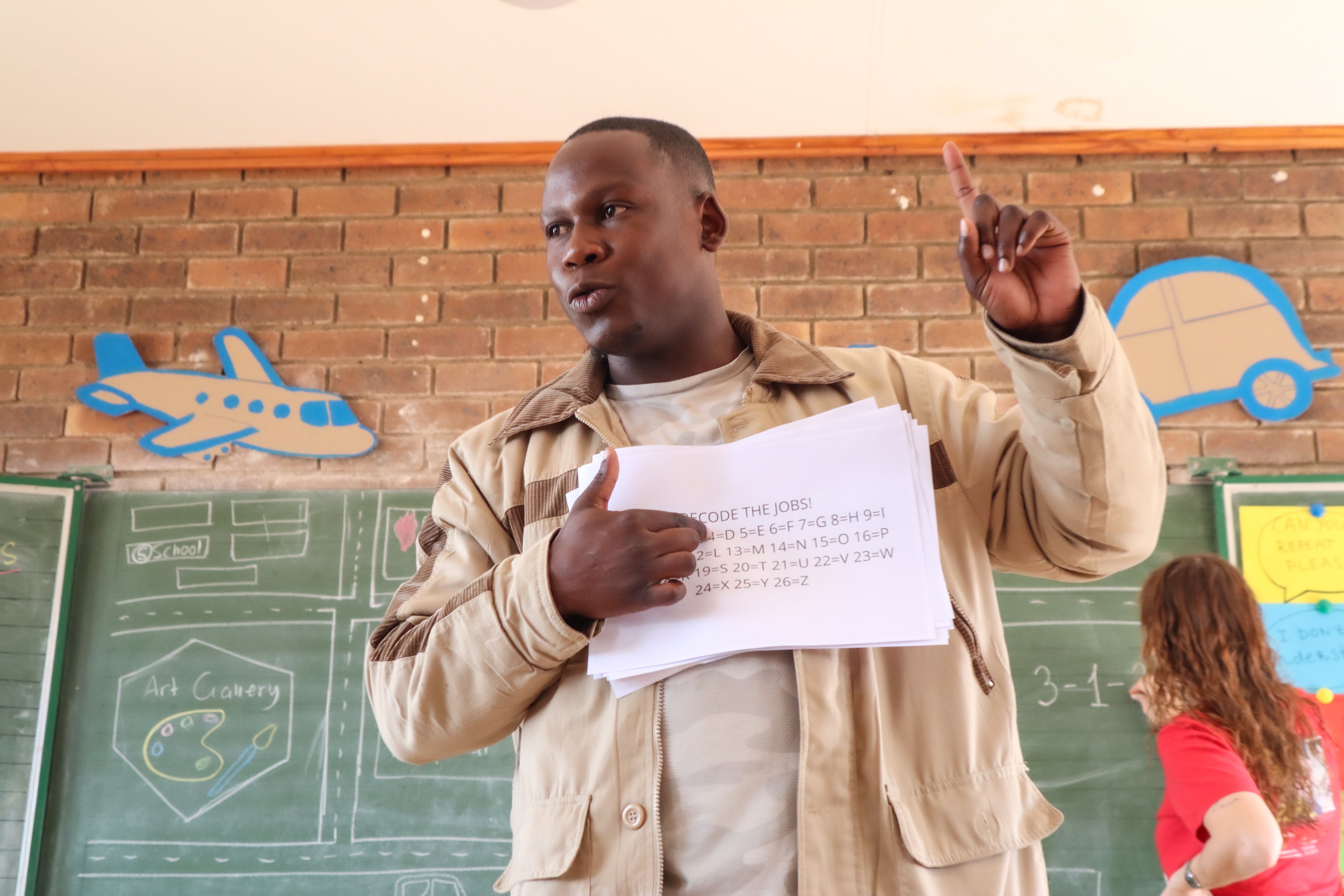
Team-teaching at Manyunyu Primary School.
It funds and helps oversee a teacher-training curriculum that has now reached more than 500 teachers across Johannesburg, Cape Town and Nairobi, built around a train-the-trainers approach designed so the program doesn’t stay dependent on foundation staff flying in.
And it grants money to independent local organizations already doing work Mosaic believes in, including Imagine Scholar, Streetlight Schools and the Shaya Izibalo Maths Institute.
The centerpiece is still ahead. Mosaic has acquired a property in rural Limpopo, in northern South Africa, for a permanent learning center, aimed at children roughly 12 to 17 years old. Mosaic starts with students in seventh grade, their last year of primary school. The foundation staff say that’s the point in their development when students are most at risk of losing motivation as they head into secondary school. The plan calls for a first cohort of around 10 students, growing to roughly 30 by the end of 2026 and up to 100 at full capacity, with a model built around small-group teaching, mentoring and continued year-round support rather than isolated interventions. Selection will favor work ethic and perseverance over academic achievements, on the theory that those achievements reflect the quality of instruction a child has received in a flawed school system rather than their own potential.
The foundation applied for charitable registration in the United Kingdom in April 2025. Mishin has said he intends to build a diverse portfolio of education projects across multiple countries over time, with existing footholds already in Kenya and the UK. For now, though, Mosaic’s bet is concentrated on a handful of schools and a few hundred children in one of South Africa’s poorest provinces, and on the idea that patient, hands-on educational investment, not headline-grabbing scale, is what will prove the model works.
Never Miss our Weekly Highlights HERE
Contact:
Click HERE to follow us on LinkedIn