Download the Complete Report Here
 Aurora Cannabis Inc. (ACB)
Organigram Deal Crystallizes Significant Shareholder Value; Record International Medical Revenue Drives Sharp Sequential Earnings Recovery in 2Q FY27
- Organigram’s acquisition of ACB crystallizes significant shareholder value while creating a global cannabis leader with expanded international reach and manufacturing scale. The announced C$7.80/share consideration represents a 93% premium to ACB’s unaffected share price, valuing the company at approximately C$561 million. The combination pairs ACB’s international medical leadership with Organigram’s European commercial network and large-scale cultivation infrastructure, strengthening the combined company’s global footprint, production capabilities and access to key medical markets. ACB shareholders are expected to retain approximately 35% economic ownership, providing continued exposure to more than C$50 million in identified annual run-rate synergies and the combined company’s growth potential.
- Record international medical cannabis revenue drove a strong recovery in ACB’s 2Q FY27 operating performance. International medical revenue increased 44% y/y to C$61.4 million, supported by growing demand in Germany and Poland. This contributed to consolidated revenue of C$86.0 million, up 9% y/y and 27% sequentially, more than offsetting continued weakness in Canadian medical cannabis following the federal reimbursement changes.
- Adjusted EBITDA recovered sharply as stronger international volumes restored operating leverage. Adjusted EBITDA increased to C$14.0 million from C$3.4 million sequentially, with the margin improving to 16.3% from 5.1%. However, EBITDA remained below C$15.4 million in the prior-year quarter, reflecting Canadian pricing pressure and higher adjusted operating expenses. Meanwhile, free cash flow improved by C$22.4 million y/y to an outflow of C$17.5 million, primarily due to reduced working capital investment, making cash conversion an important priority.
- Strategic investments in manufacturing and distribution strengthen ACB’s ability to capitalize on international medical demand. Safari generated C$4.9 million in quarterly revenue, demonstrating early commercial traction following its acquisition. The completed Leuna expansion is expected to more than double German flower production, while the acquisition of U.K.-based Internode Pharma and HAP Pharma provides direct import, distribution and pharmacy capabilities. Together, these initiatives improve supply-chain control, support international growth and provide opportunities for additional operating efficiencies.
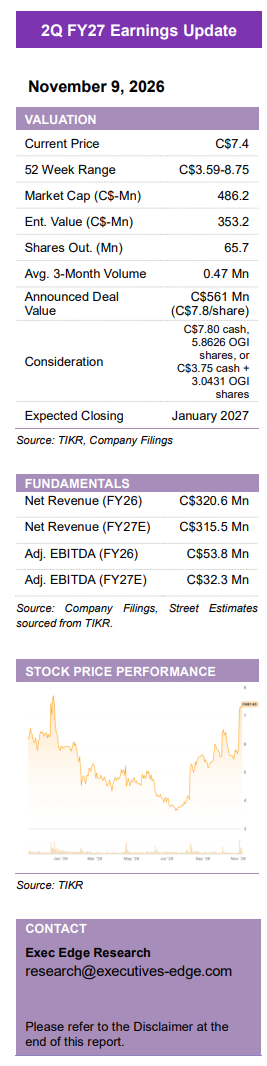
- The Organigram transaction establishes a new valuation benchmark for ACB, with further shareholder returns tied to deal completion and the combined company’s performance. At ACB’s C$7.40 closing price, shares traded approximately 2.1% below the implied mixed consideration of C$7.55/share, based on Organigram’s C$1.25 share price. While the negotiated transaction represents substantial value realization relative to historical trading levels, additional upside will depend on successful closing, synergy realization, earnings growth and the combined company’s future trading valuation.
Organigram Deal Unlocks Significant Value and Creates a Global Cannabis Leader
- ACB’s agreement to be acquired by Organigram crystallizes substantial shareholder value and recognizes the strategic value of its international medical cannabis franchise. Announced on November 3, 2026, the C$7.80/share transaction values ACB at approximately C$561 million on a fully diluted basis. The consideration represents a 93% premium to ACB’s unaffected C$4.03 closing price prior to Curaleaf’s hostile approach, a 32% premium to ACB’s November 2 closing price and a 21% premium to the implied value of Curaleaf’s revised proposal. For shareholders, the transaction represents a significant value-realization event that better reflects the company’s international medical cannabis franchise, EU-GMP-certified manufacturing infrastructure and long-term earnings potential than was recognized in its pre-bid market valuation.
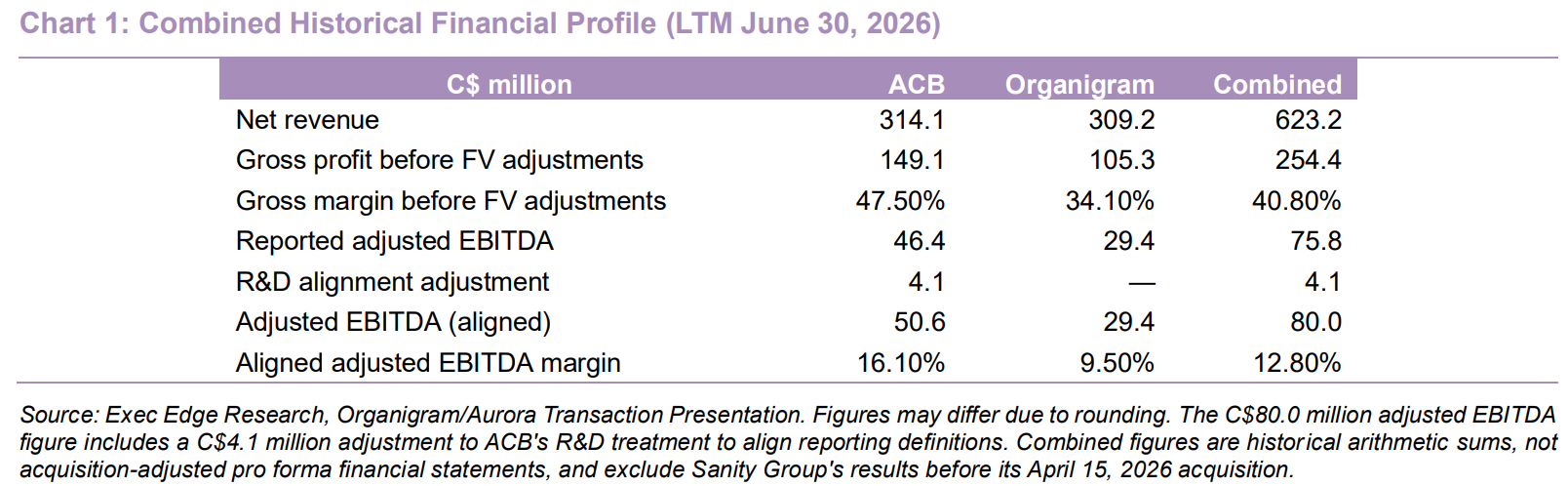
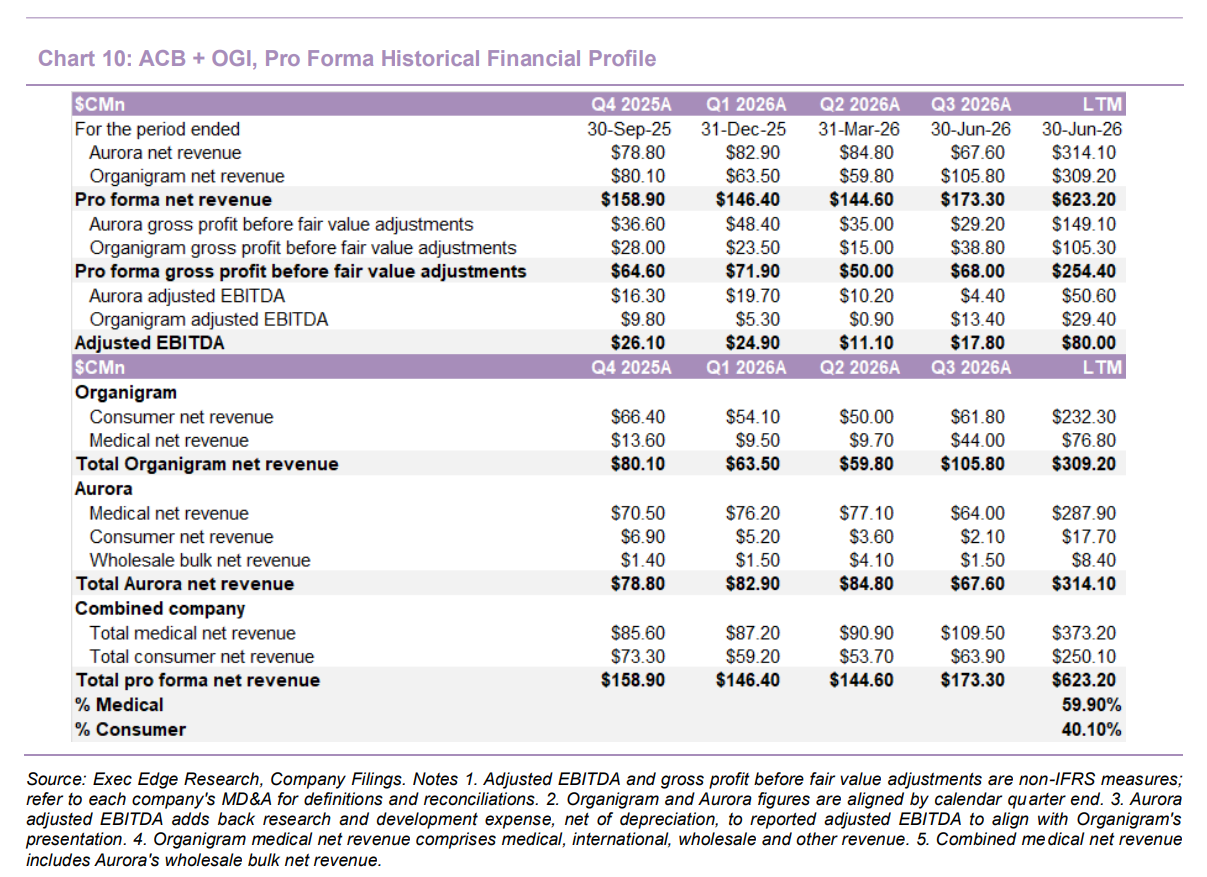
- The combination creates a C$623 million global cannabis platform, with ACB contributing a disproportionate share of earnings through its higher-margin medical business. Through June 30, 2026, the companies generated combined LTM revenue of C$623.2 million and aligned adjusted EBITDA of C$80.0 million. While ACB contributed ~50% of combined revenue, it accounted for roughly 63% of aligned adjusted EBITDA, reflecting the superior profitability of its medical cannabis operations. On a combined basis, approximately 60% of revenue is derived from medical, international, wholesale and related channels, providing a more diversified revenue profile than either company independently. The transaction combines ACB’s international medical leadership and earnings strength with Organigram’s Canadian recreational scale, production capabilities and European commercial footprint, establishing a complementary operating platform with opportunities to expand margins through greater scale and operating efficiencies.
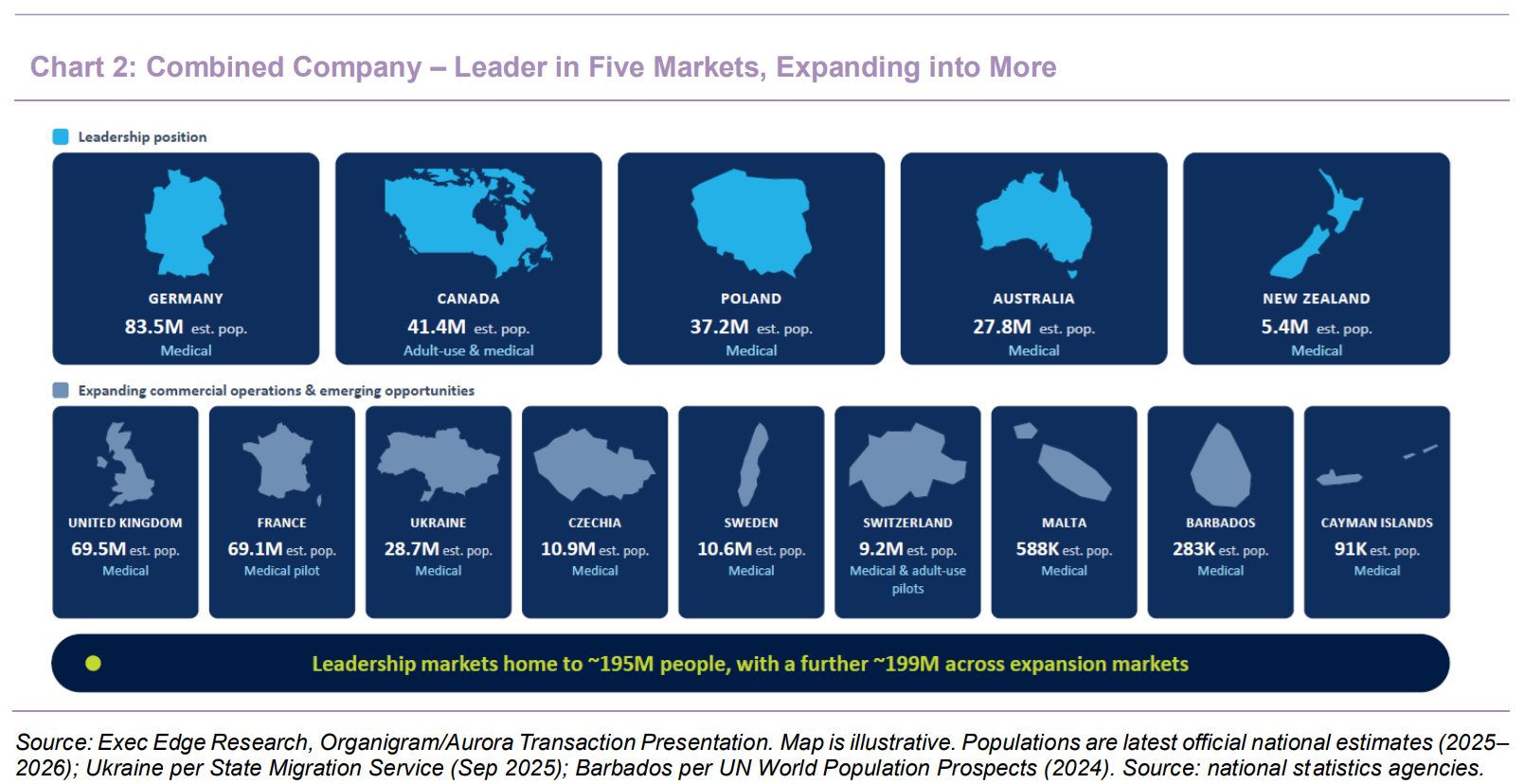
- The combination strengthens ACB’s international medical cannabis position by pairing its established production capabilities and product portfolio with Organigram’s broader European commercial network. ACB brings a regulated medical cannabis franchise and established supply relationships across Germany, Poland, Australia and New Zealand, while Organigram’s acquisition of Sanity Group adds established European brands and direct relationships with pharmacies, physicians and distributors. Germany remains central to the growth strategy, supported by strong demand for ACB’s proprietary medical cultivars and expanding domestic supply capabilities. Together, the businesses combine complementary production, distribution and regulatory expertise, creating opportunities to expand product reach, accelerate commercialization and improve market penetration by leveraging existing commercial infrastructure.
- The combination significantly expands manufacturing scale, creating opportunities to improve capacity utilization, production costs and international margins. ACB’s standalone network comprises approximately 47,000 kilograms of annual cultivation capacity, while Organigram adds more than 122,000 kilograms, primarily through its 120,000-kilogram Moncton facility. The transaction therefore increases ACB’s accessible cultivation capacity approximately 3.6x to 170,000 kilograms annually across a combined network of 14 facilities, complemented by more than 75 metric tons of EU-GMP production and processing capacity. Safari’s 36,000 kilograms of annual EU-GMP conversion capacity provides a potential certified export pathway for Moncton’s large-scale output, while the completed Leuna expansion strengthens domestic German supply. ACB’s proprietary genetics, which have demonstrated 40% to 100% yield improvements over legacy varieties, can also be deployed across a substantially larger cultivation footprint alongside Organigram’s R&D capabilities.
- The transaction offers meaningful earnings upside through more than C$50 million in identified annual run-rate revenue and cost synergies, equivalent to over 60% of the combined company’s C$80 million LTM aligned adjusted EBITDA. Revenue opportunities are expected from cross-selling ACB’s proprietary medical products through Organigram’s commercial channels, expanding international distribution and accelerating commercialization through shared product development. Cost synergies are expected from procurement efficiencies, consolidated distribution, reduced public-company expenses, improved facility utilization and optimizing production across the combined network by directing demand toward lower-cost facilities. ACB’s higher-margin medical business provides a strong foundation for translating these opportunities into incremental earnings, while Organigram’s scale and commercial infrastructure enhance their potential impact. We believe successful execution should support stronger operating leverage, higher EBITDA margins and improved cash generation as the combined platform develops.
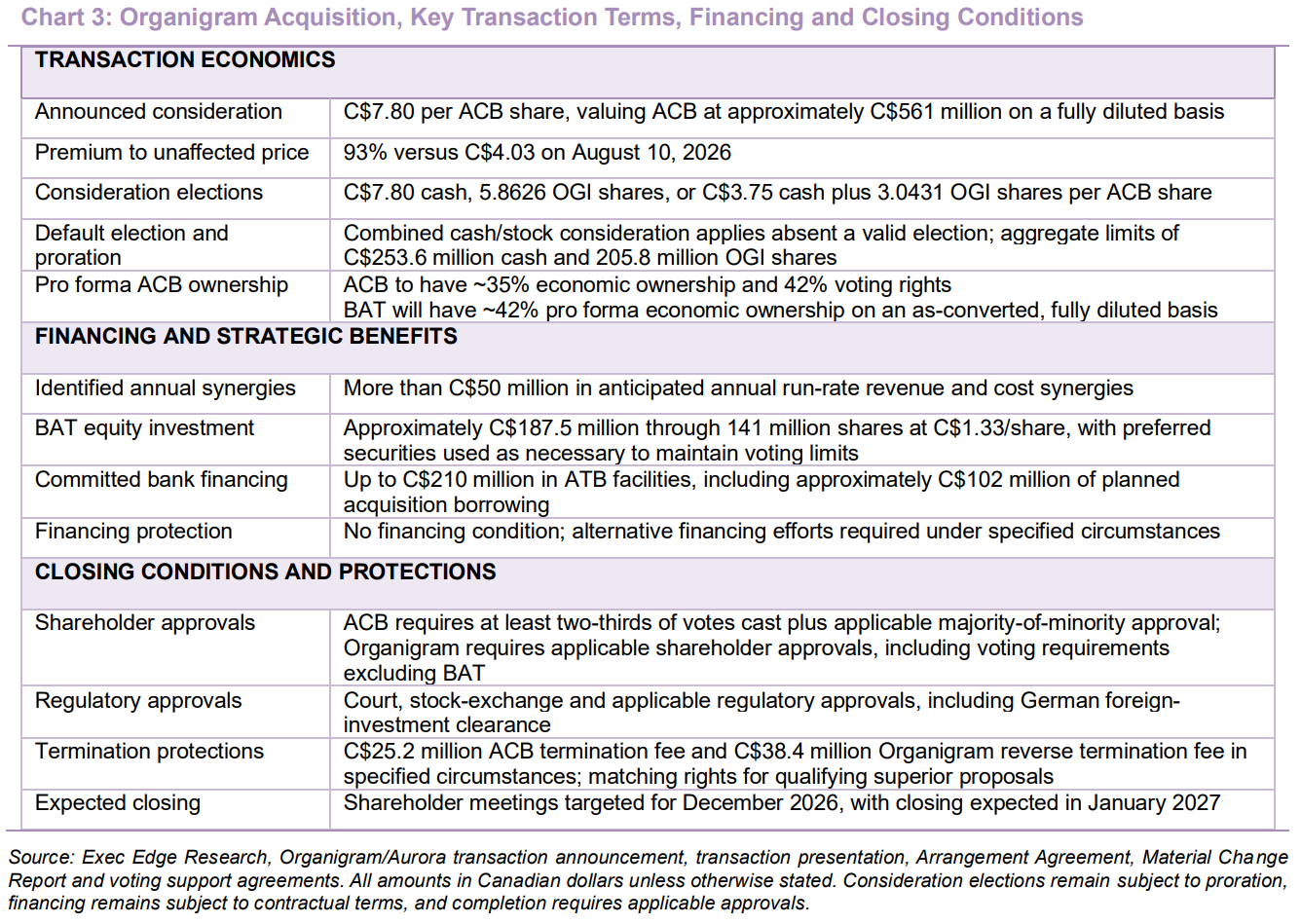
- The transaction combines substantial upfront value realization with continued participation in the combined company’s growth and potential rerating. ACB shareholders may elect cash, Organigram shares or a combination of both, with each alternative valued at C$7.80 per ACB share based on Organigram’s 20-day VWAP at announcement. The standard combined consideration consists of C$3.75 in cash and 3.0431 Organigram shares per ACB share, representing approximately 48% cash and 52% stock value, and serves as the default election. Final allocations remain subject to aggregate cash and stock limits and proration provisions, as outlined in the chart below. Importantly, shareholders receiving Organigram shares retain exposure to the combined platform’s anticipated synergies, enhanced scale and potential valuation upside.
- ACB shareholders retain meaningful ownership and voting influence in the combined business, preserving participation in its longer-term growth and value creation. Following completion, ACB shareholders are expected to hold approximately 35% of the combined company’s economic ownership on a fully diluted basis, together with approximately 42% of voting rights, compared with roughly 9% economic ownership contemplated under Curaleaf’s competing proposal. BAT is expected to hold approximately 42% of economic ownership on an as-converted basis, with voting ownership limited to approximately 30%, while other Organigram shareholders will hold approximately 24% of economic ownership and 28% of voting rights. BAT’s use of non-voting convertible preferred securities allows it to maintain its voting threshold without introducing a multiple-voting-share structure.
- BAT’s concurrent investment and committed bank financing provide a clear funding pathway for the acquisition and support the combined company’s financial flexibility. BAT will invest approximately C$187.5 million in Organigram, alongside up to C$210 million in committed ATB Financial facilities, including approximately C$102 million of planned acquisition borrowing. ACB also contributes C$133.0 million in cash, restricted cash and short-term investments as of September 30, including C$83.6 million in unrestricted liquidity, with no loans or borrowings outstanding. Approximately C$46.7 million of restricted cash is expected to become unrestricted during 3Q FY27. The acquisition has no financing condition, while BAT’s equity investment reduces reliance on debt financing and supports continued investment in international manufacturing and commercial expansion.
- The negotiated Organigram agreement offers a superior outcome to Curaleaf’s unsolicited proposal, with financing commitments and contractual protections supporting the targeted January 2027 closing. Curaleaf revised its bid in October 2026 to US$1.00 in cash and 0.4013 Curaleaf shares per ACB share, which ACB’s Board rejected as undervaluing the business. Organigram’s subsequent agreement offers higher consideration and greater continued equity participation for ACB shareholders. The transaction has received unanimous approval from both companies’ boards following ACB’s strategic review and is supported by binding voting commitments from BAT and ACB directors and executives representing approximately 0.6% of outstanding ACB shares. Completion requires approval from both shareholder groups, including the applicable ACB two-thirds and majority-of-minority thresholds, together with court, stock-exchange and regulatory approvals, including German foreign-investment clearance. The agreement permits ACB to consider qualifying superior proposals, subject to Organigram’s matching rights and specified termination fees of C$25.2 million payable by ACB and C$38.4 million payable by Organigram under applicable circumstances. Shareholder meetings are expected in December 2026, with closing targeted for January 2027.
Earnings Update: Record International Medical Growth Drives Strong Sequential Recovery
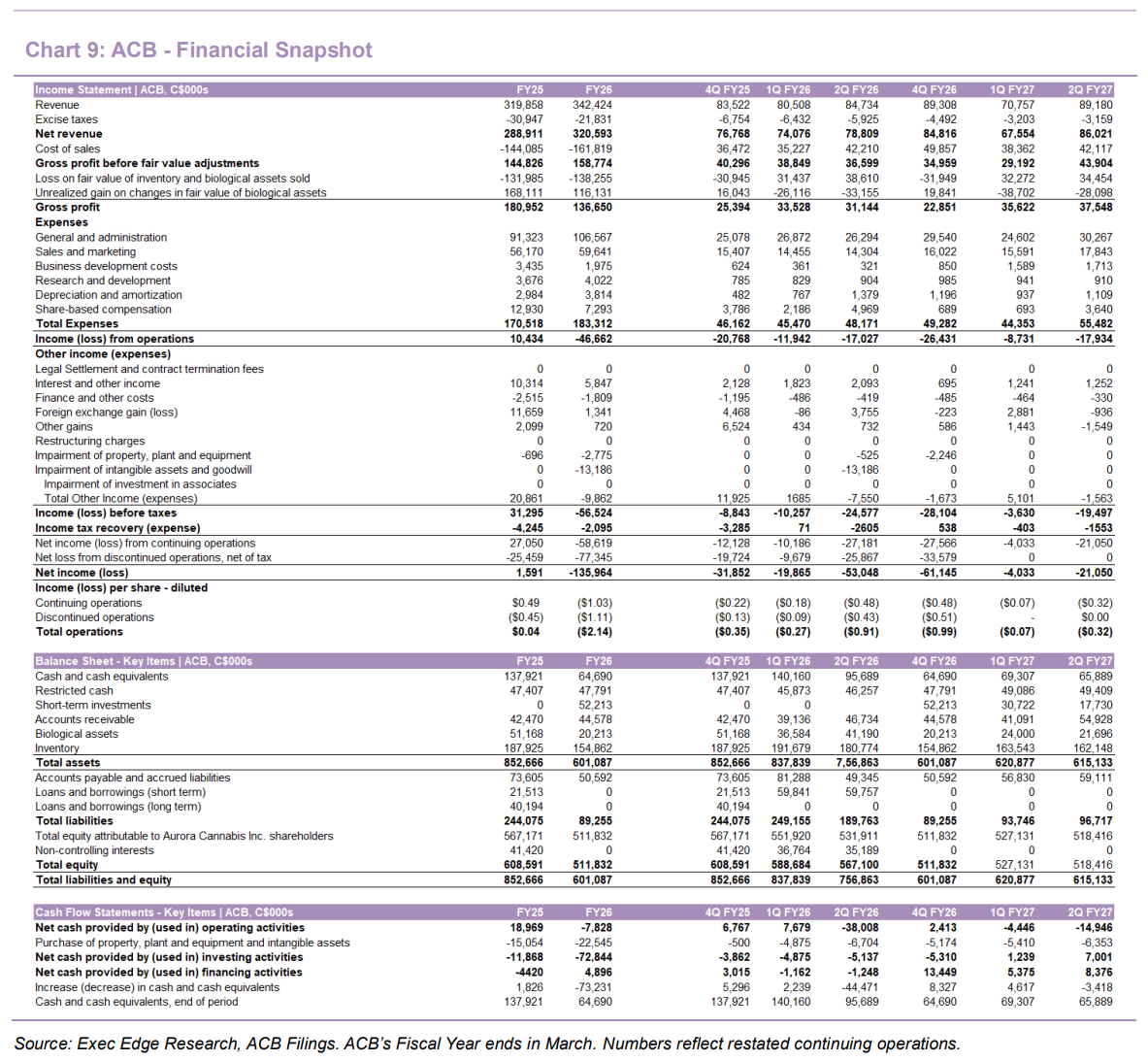
- International medical cannabis growth in 2Q FY27 is increasingly overcoming Canadian reimbursement pressure, restoring consolidated revenue growth and reinforcing ACB’s global medical-first strategy. ACB reported net revenue of C$86.0 million for the quarter ended September 30, 2026, up 9% from C$78.8 million y/y and 27% from C$67.6 million sequentially. Medical cannabis revenue increased 17% to C$82.5 million from C$70.5 million y/y and 29% from C$64.0 million in 1Q, representing 96% of consolidated revenue compared with 89% a year earlier. International medical revenue was the principal driver, increasing 44% y/y to a record C$61.4 million from C$42.7 million and 42% sequentially from C$43.3 million. This represented a C$18.7 million y/y increase, more than offsetting lower Canadian medical and consumer cannabis sales.
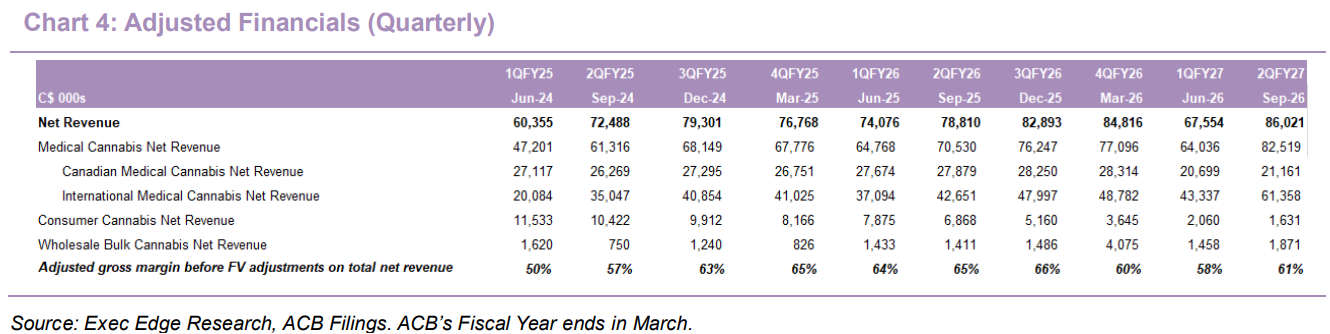
- Germany and Poland continue to anchor international medical growth, supported by expanding patient demand and resilient Australian sales. European revenue increased 54% y/y to C$47.8 million and 49% sequentially, supported by stronger patient demand in Germany and Poland, while Australian revenue grew 21% to C$12.3 million. International medical revenue represented 71% of consolidated sales compared with 54% a year earlier, underscoring ACB’s increasing exposure to higher-growth regulated markets. In contrast, Canadian medical revenue declined 24% y/y to C$21.2 million following the April 2026 federal reimbursement reduction, although it stabilized sequentially with 2% growth. Meanwhile, consumer cannabis revenue declined 76% y/y to C$1.6 million, reflecting ACB’s planned exit from lower-margin recreational channels as it prioritizes higher-return domestic and international medical markets.
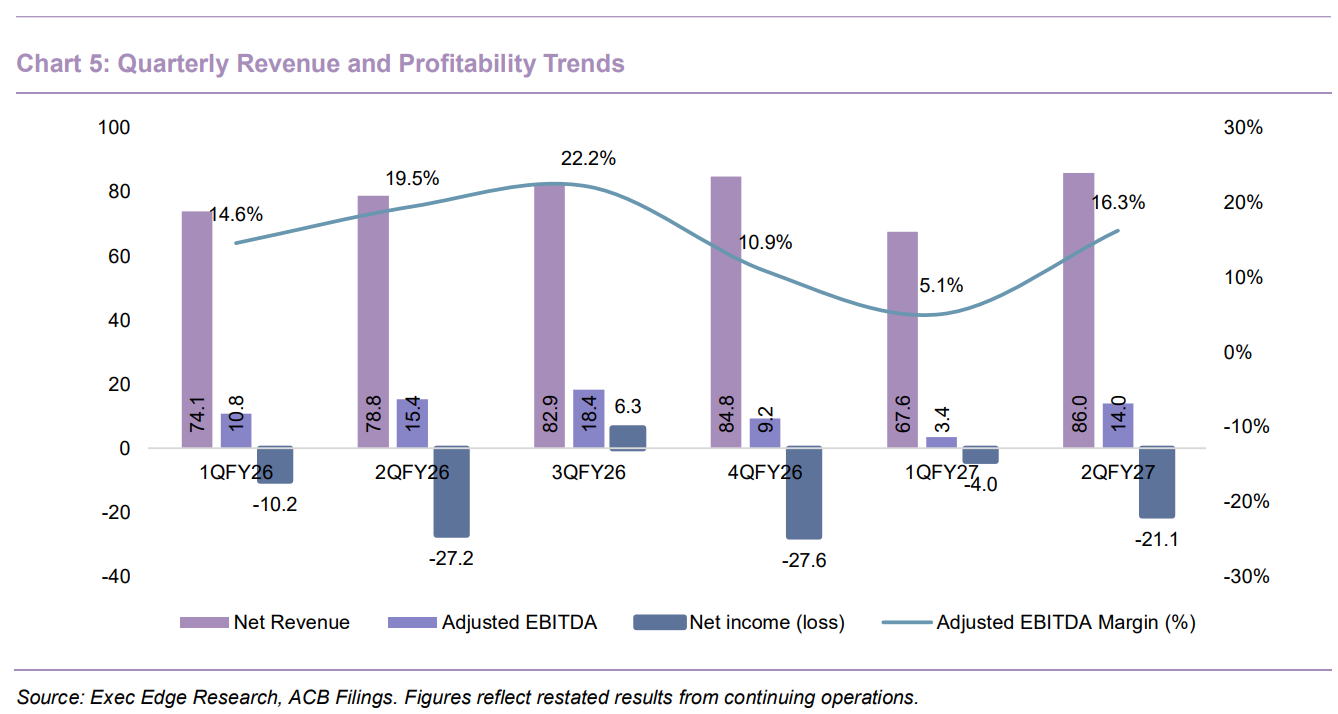
- International medical growth restored operating leverage, driving a sharp sequential recovery in gross profitability and adjusted EBITDA. Adjusted gross profit increased 33% sequentially to C$52.3 million from C$39.5 million, lifting adjusted gross margin to 61% from 58%, compared with 65% a year earlier. Medical cannabis adjusted gross margin was 62%, down from 69% y/y, reflecting Canadian reimbursement changes and competitive pricing pressure. Adjusted EBITDA rebounded to C$14.0 million from C$3.4 million in 1Q FY27, with margins recovering to 16.3% from 5.1%, as C$12.8 million of incremental adjusted gross profit more than offset C$2.3 million of higher adjusted SG&A. However, EBITDA remained below C$15.4 million in the prior-year quarter, reflecting continued margin pressure and a higher normalized operating expense base. Sustaining this recovery will depend on continued international growth, medical pricing stability and disciplined operating expense management.
- Higher commercial investment to support international growth and unfavorable foreign exchange movements constrained earnings despite improving operating performance. Sales and marketing expense increased 25% y/y to C$17.8 million, reflecting higher selling and distribution costs associated with international growth, while adjusted SG&A rose 7% to C$37.4 million. Reported G&A increased 15% to C$30.3 million, partly reflecting higher professional fees associated with Curaleaf’s bid, while business transformation adjustments increased to C$10.7 million from C$5.7 million y/y. These adjustments were excluded from adjusted EBITDA, separating non-recurring and transformation-related expenses from underlying operating performance. Adjusted net income declined to C$3.1 million from C$12.0 million, impacted by higher operating expenses, a C$4.7 million unfavorable foreign exchange swing and lower interest income. Meanwhile, the reported net loss from continuing operations narrowed to C$21.1 million from C$27.2 million, partly reflecting the absence of C$13.7 million in prior-year impairment charges.
- Safari and the completed Leuna expansion are expanding ACB’s internal production capacity and strengthening supply-chain control as international medical demand accelerates. Safari generated C$4.9 million in quarterly revenue and C$0.5 million in pre-tax profit, bringing its contribution since the April acquisition to C$7.7 million and C$2.2 million, respectively. The EU-GMP-certified facility expands processing and export capabilities for key medical markets, with approximately C$3.5 million in planned growth capital expenditure over three years to expand capacity and improve operating efficiency. In Germany, the completed Leuna expansion is expected to more than double annual flower production, strengthening domestic supply in a major growth market. Cultivation performance also improved, with quarterly dried cannabis production increasing 28% y/y to 16,536 kilograms from 12,934 kilograms, supported by stronger yields and operating efficiencies. Together, these initiatives provide greater sourcing flexibility and the potential to reduce third-party dependence while supporting further international revenue growth without proportionate increases in infrastructure investment.
- The U.K. acquisition extends ACB’s international strategy downstream, establishing a direct distribution and pharmacy platform to support medical market expansion. In August, ACB acquired Internode Pharma and HAP Pharma for approximately C$4.3 million, including C$2.1 million in cash and C$1.9 million in contingent consideration. Internode’s import and wholesale licenses, together with HAP’s pharmacy operations, provide greater control over product distribution and patient access in the U.K. medical market. The acquisition offers the potential to reduce reliance on third-party distributors and improve commercial margins while supporting future product introductions. Although initial revenue traction has not been disclosed, the relatively modest investment establishes a platform for future expansion that complements ACB’s expanding EU-GMP production network and the broader commercial capabilities available through the proposed Organigram combination.
- Free cash flow improved y/y on lower working capital investment, but cash conversion remains weak despite the sequential EBITDA recovery. FCF was an outflow of C$17.5 million in 2Q FY27 versus C$39.9 million a year earlier, primarily reflecting a reduction in working capital investment to C$12.6 million from C$37.2 million. However, the outflow increased from C$5.8 million sequentially despite the sharp EBITDA recovery, while first-half operating cash flow before working capital deteriorated to a C$12.2 million outflow from C$1.3 million of inflow y/y. Inventory increased to C$162.1 million at September 30 from C$154.9 million at March 31, while receivables rose to C$54.9 million from C$44.6 million, indicating continued working capital demands as production and international sales expand. Encouragingly, the inventory provision declined to C$18.2 million from C$27.3 million, supported by the clearance of previously provided consumer inventory. While the lower inventory provision is constructive, sustained improvement in cash conversion will require tighter working capital management alongside continued international revenue growth.
- ACB retains meaningful financial flexibility despite declining cash balances, with capital allocation increasingly focused on generating returns from recent international investments. Cash, restricted cash and short-term investments totaled C$133.0 million at September 30, compared with C$149.1 million at June 30 and C$164.7 million at March 31, including approximately C$83.6 million in unrestricted liquidity. The anticipated release of C$46.7 million in restricted self-insurance cash during 3Q FY27 should materially increase immediately available funds without increasing total liquidity, while the company remains free of loans and borrowings apart from lease liabilities of C$21.4 million. First-half capital expenditures totaled C$11.8 million, primarily supporting Leuna, Alpine and River, alongside approximately C$17.2 million in acquisition-related cash payments. ACB also raised C$17.0 million through its ATM program, contributing to an increase in shares outstanding to 65.7 million from 58.9 million at fiscal year-end. With major manufacturing and distribution investments now in place, stronger utilization, working capital efficiency and improved cash conversion will be increasingly important to generating returns on the expanded asset base.
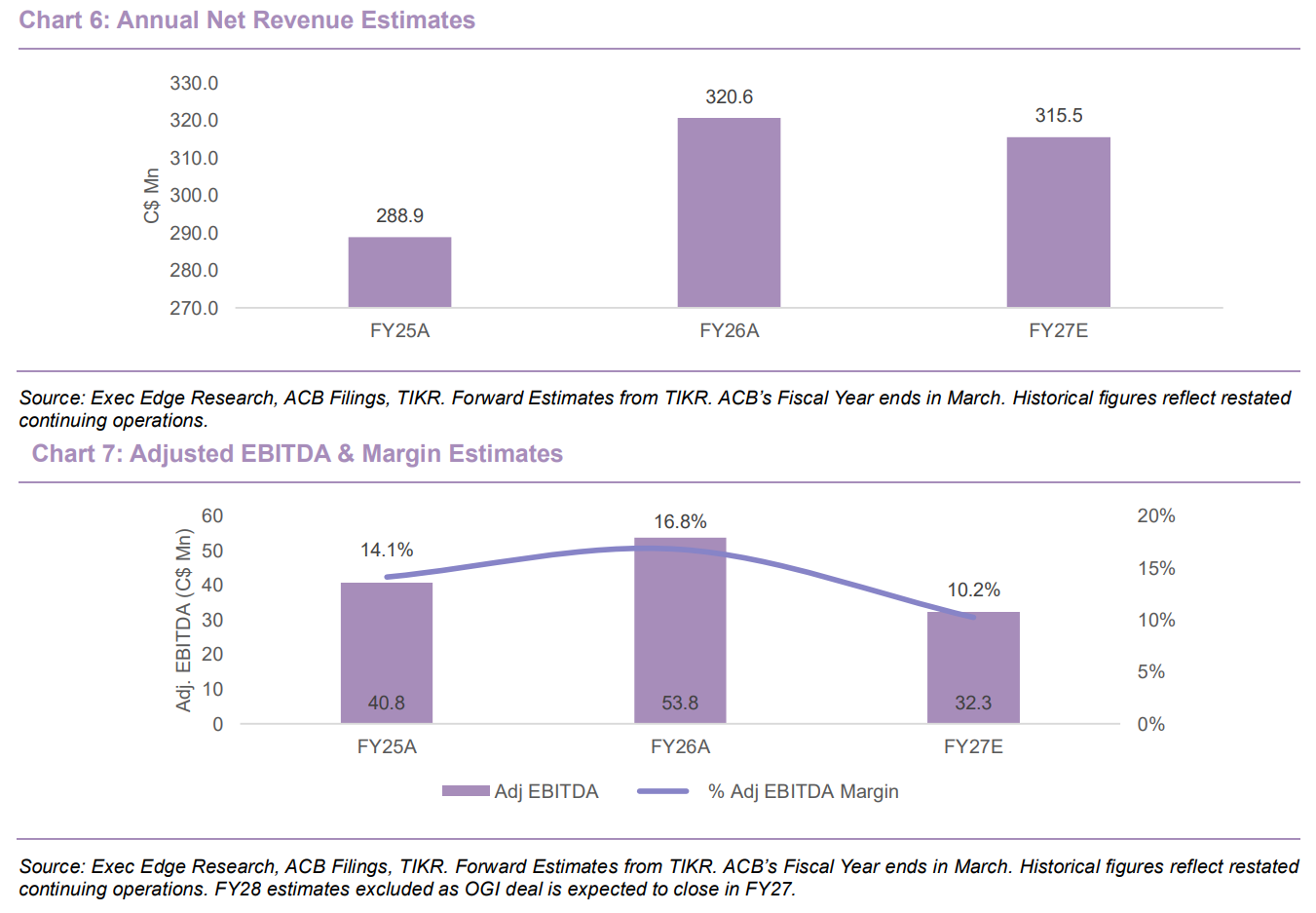
- ACB’s international growth and improving operating leverage create potential upside to FY27 earnings expectations, although cash conversion remains a key constraint. Sustained demand in Germany and Poland, increased EU-GMP manufacturing capacity and greater control over U.K. distribution provide a foundation for continued international expansion. The sequential recovery in adjusted EBITDA to C$14.0 million from C$3.4 million in 1Q FY27 establishes a stronger earnings run rate, although sustaining this improvement will depend on volume growth, margins and operating expense discipline. According to Street estimates sourced from TIKR, FY27E revenue is projected at C$315.5 million, down 1.6% y/y, with adjusted EBITDA of C$32.3 million, implying a 10.2% margin. With C$17.4 million of adjusted EBITDA generated in 1H FY27, consensus implies C$14.9 million in 2H, or approximately C$7.5 million per quarter, suggesting potential estimate upside if the 2Q earnings recovery proves sustainable.
Valuation: Organigram Transaction Establishes Higher Benchmark and Upside Potential
- Disclaimer: Exec Edge does not publish proprietary estimates, ratings, price targets, or investment recommendations. The valuation discussion below is illustrative only and is based on company filings, management commentary, and third-party data and estimates. It does not constitute a recommendation, price target, rating, or prediction of future pricing.
- The Organigram transaction establishes a substantially higher valuation benchmark for ACB while preserving further shareholder upside. The announced C$7.80/share consideration values ACB at approximately C$561 million, representing a 93% premium to its unaffected C$4.03 share price and a 32% premium to its November 2 closing price of C$5.89. At Organigram’s 11/6 closing price of C$1.25, the mixed consideration implies approximately C$7.55/share, representing a 2.1% gross spread to ACB’s C$7.40 closing price. The all-stock alternative implies C$7.33/share, with elections subject to proration. Beyond the immediate transaction value, ACB shareholders are expected to retain approximately 35% economic ownership in the combined company, providing exposure to more than C$50 million in identified annual run-rate revenue and cost synergies and potential valuation upside.
- The announced consideration reinforces the valuation framework and underlying thesis established in our previous coverage. In our August update, ACB traded at 0.92x FY27E sales and 4.95x adjusted EBITDA, while our 1.40x P/S framework illustrated a valuation of approximately C$6.30/share. Organigram’s C$7.80/share offer represents a 24% premium to that value, recognizing ACB’s international medical franchise, EU-GMP infrastructure and earnings potential. The recent 44% y/y international medical revenue growth and sharp sequential EBITDA recovery further support the underlying business fundamentals.
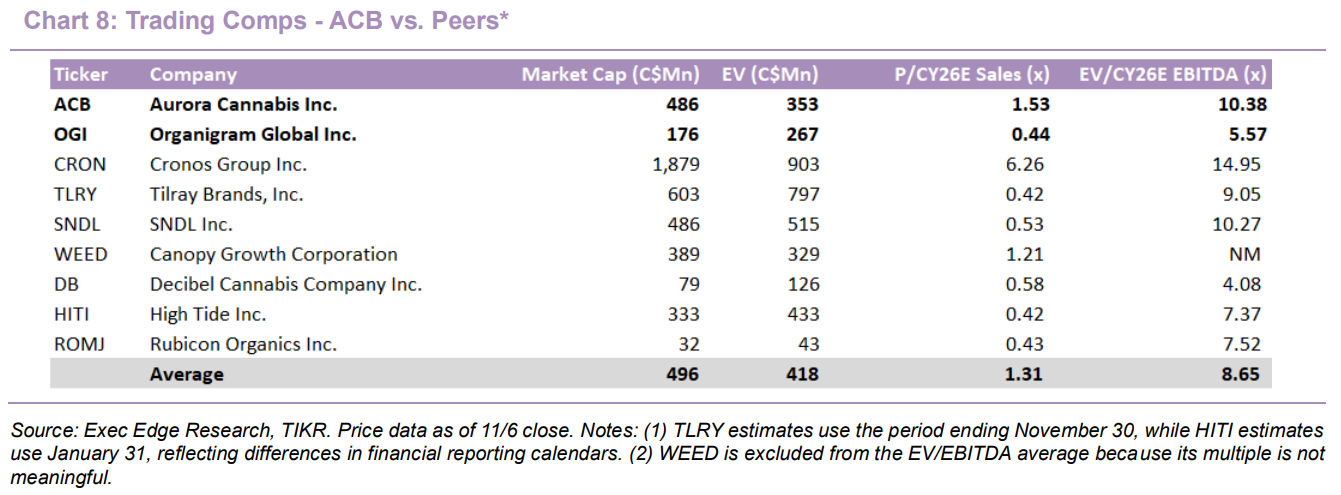
- ACB’s current trading premium reflects its differentiated international medical franchise and the strategic value recognized through Organigram’s acquisition announcement. With a market capitalization of C$486 million and enterprise value of C$353 million, ACB trades at 1.53x CY26E sales and 10.38x CY26E adjusted EBITDA, based on Street estimates sourced from TIKR, compared with peer averages of 1.31x and 8.65x, respectively. The premium reflects ACB’s international medical leadership, certified manufacturing infrastructure and higher-margin business mix, alongside the valuation uplift following Organigram’s C$7.80/share acquisition announcement. We believe EBITDA recovery, supported by 44% y/y international medical revenue growth, reinforces the underlying strength of ACB’s operations. P/S therefore provides a more meaningful relative valuation comparison amid near-term earnings compression, while the negotiated transaction remains the primary valuation benchmark, with further shareholder returns increasingly linked to transaction completion, realization of identified synergies and the combined company’s future trading valuation.
Read Exec Edge’s Initiation on ACB Here
Subscribe to our Weekly Newsletter to Receive All Research
Contact: