
Download the Complete Report Here
 AIR Global PLC (AIIR)
Best-in-Class Execution Despite Supply Chain Disruption; 2H Recovery and NGC Progress Support Outlook. Valuation Remains Attractive.
- Key Takeaways:
- Best-in-class execution supported 3.7% revenue growth and stable adj. EBITDA despite an FSM shipment decline during the Hormuz disruption.
- Americas led regional earnings growth, with adj. EBITDA up 17.2% and margin expanding to 46.3%, while MEAA remained resilient and Europe remained pressured.
- 2H26 expected to pivot to more volume-led growth as channel inventories normalize, with 2026 revenue guided +4-6% and adj. EBITDA growth of low-to-mid single digits.
- Crown Switch is the principal near-term NGC catalyst, backed by the $20 million Greentank investment, differentiated technology and a targeted U.S. commercialization strategy.
- Valuation remains compelling relative to core earnings resilience and visible recovery, with NGC optionality, deleveraging and potential shareholder returns providing additional upside.
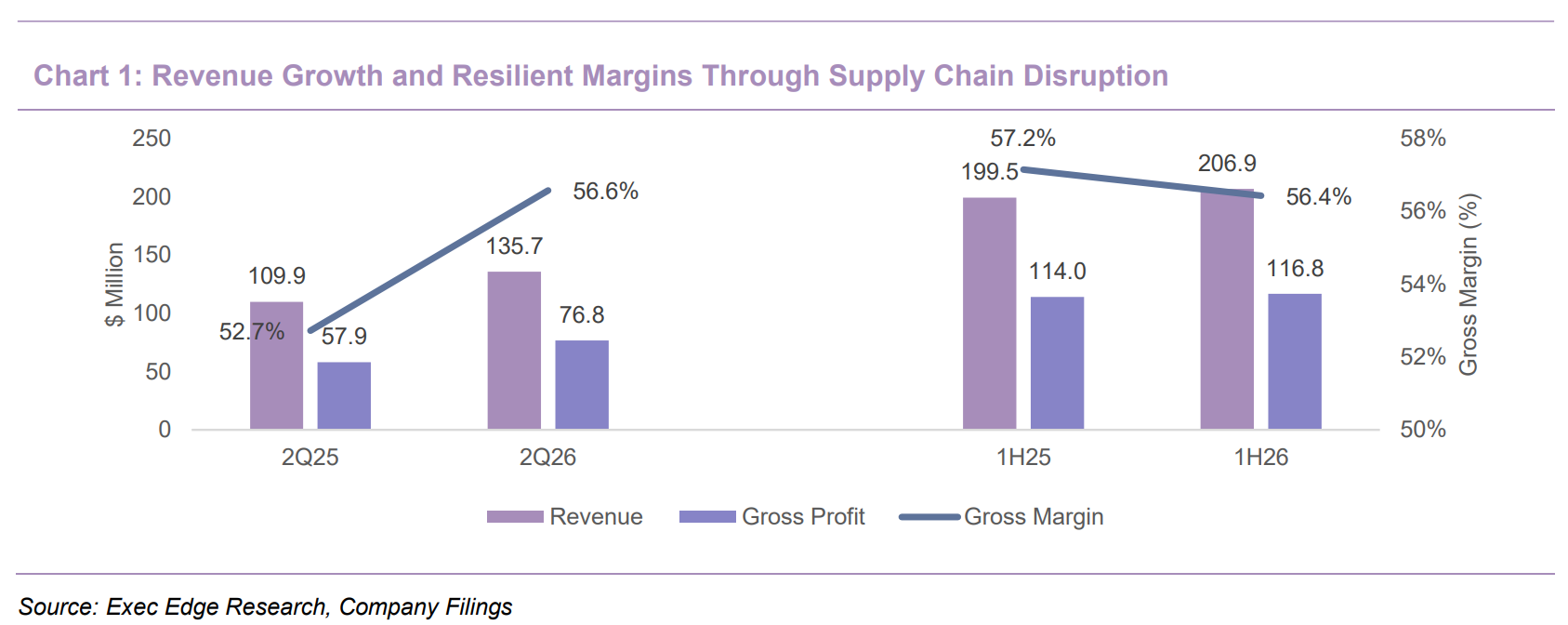
- Best-in-class execution enabled AIIR to grow through a severe supply-chain disruption while protecting the underlying earnings base. Revenue rose 3.7% y/y to $206.9 million in 1H26 from $199.5 million, gross profit increased 2.4% to $116.8 million from $114.0 million, and adjusted EBITDA was stable at $71.7 million despite FSM shipment volumes declining 9.0%. Global Travel Retail volumes fell 46.5%, while FSM shipments excluding GTR declined 6.6%, reflecting the closure of the Strait of Hormuz, which historically carried approximately 70% of shipment volumes. The disruption was most acute in March, when shipment volumes declined 38.6%, before returning to growth in June. Importantly, customer purchase orders remained intact and wholesaler inventories declined, confirming that the shortfall reflected shipment availability rather than weaker end demand. Revenue growth and stable adjusted EBITDA through the disruption underscore the strength and resilience of a category-leading franchise with an estimated 36%-44% volume share across its operating markets.
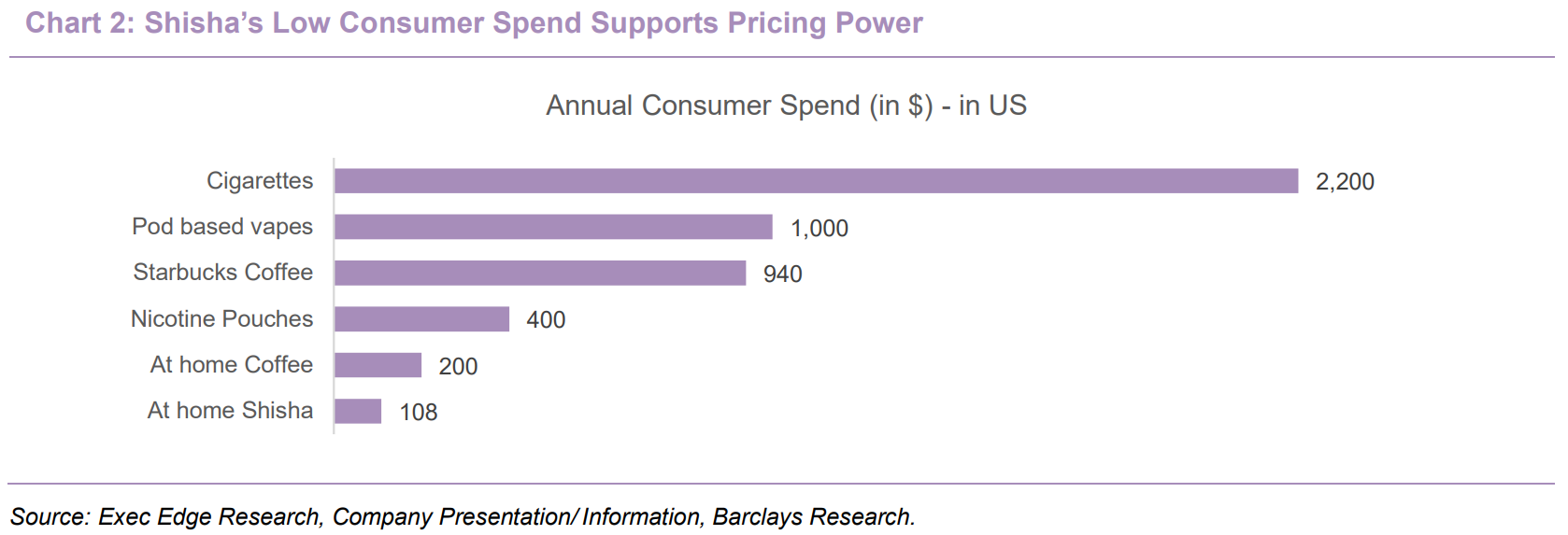
- Strong pricing power more than offset shipment pressure, supported by the category’s relatively low consumer spend. FSM revenue increased 3.4% y/y to $204.7 million despite the 9.0% shipment decline, reflecting 14.0% price/mix growth as AIIR front-loaded 2026 pricing to offset higher logistics and raw-material costs and prioritized supply to higher-ASP markets. The ability to deliver double-digit price/mix without meaningful share erosion underscores the strength of the franchise, particularly given annual U.S. shisha spend of around $110 versus more than $2,000 for cigarettes, close to $1,000 for pod-based vapes and around $400 for nicotine pouches. This relatively low spend provides room to offset cost inflation through pricing without materially affecting affordability. The 14.0% 1H contribution should moderate in 2H as comparisons toughen and mix shifts toward lower-ASP markets, while AIIR expects approximately 4%-6%+ price/mix in a normal year, supported by category leadership, innovation and premiumization.
- Supply-chain redesign is turning the 1H disruption into a longer-term resilience investment. AIIR is using the event to structurally de-risk its supply chain rather than simply restore the prior logistics model. Following the Hormuz closure, the company established alternative outbound routes through Oman and Saudi Arabia and diversified inbound raw-material sourcing, reducing reliance on a corridor that historically carried ~70% of shipments. AIIR incurred $3.8 million of extraordinary disruption costs in 1H26, primarily from air freight and temporarily elevated ingredient procurement, while additional land and sea rerouting costs and logistics inflation remained within adjusted operating earnings. Manufacturing diversification is also accelerating, with the Romania facility expected to be commissioned by year-end 2026 and operational in 2027 alongside UAE and Poland production. The near-term cost burden is weighing on 2026 profitability, but the redesigned network should meaningfully reduce the risk that future regional disruptions translate into another sharp interruption in shipments.
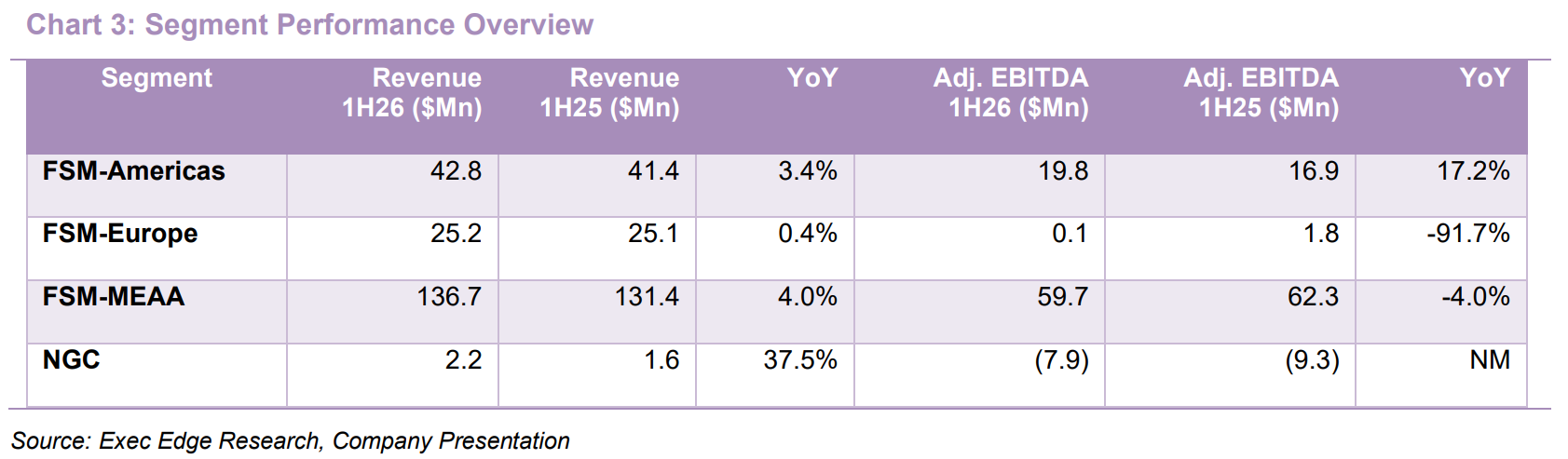
- Geographic diversification helped contain the disruption, with strength in the Americas and MEAA offsetting continued pressure in Europe.
- Americas delivered the strongest regional earnings performance, with U.S. share gains and premiumization driving meaningful operating leverage. Revenue increased 3.4% y/y to $42.8 million, while adjusted EBITDA rose 17.2% to $19.8 million, expanding margin to 46.3% from 40.8% despite marginally lower volumes. The U.S., AIIR’s largest market by revenue, is expected to grow high single digits in 2026 as stable category demand, continued share gains and premium innovation, including the Snoop Dogg collaboration, support mix. With estimated U.S. volume share of 60%-65%, the segment continues to demonstrate strong earnings conversion, with modest revenue growth translating into materially higher EBITDA through pricing, premiumization and cost control.
- MEAA absorbed the bulk of disruption-related pressure while underlying commercial momentum remained resilient. Revenue increased 4% y/y to $136.7 million from $131.4 million, supported by 17.1% price/mix, while adjusted EBITDA declined 4% to $59.7 million from $62.3 million, reducing margin to 43.7% from 47.4% as the segment absorbed higher supply-chain costs related to the Middle East conflict and incremental public-company costs, with corporate headquarters included within MEAA. Commercial performance was stronger than the earnings decline suggests, with market shares stable despite significant pricing and Saudi Arabia returning to share growth. The late-2025 launch of value-oriented Al Aseel is helping AIIR address discount competitors without diluting Al Fakher’s premium positioning, while easier comparisons following 2025 distribution-related inventory movements should support stronger Saudi Arabia growth through the remainder of 2026.
- Europe remained the most challenged region, with structural illicit-market pressure compounded by temporary shipment timing effects. Revenue was broadly stable at $25.2 million versus $25.1 million in 1H25, while adjusted EBITDA declined to $0.1 million from $1.8 million, reducing margin to ~0.4% from 7.2%. Steep excise increases and insufficient enforcement continue to shift demand toward illicit products, while 1H was also affected by the temporary reallocation of Poland production toward higher-priced markets, including the U.S. Management expects that shipment distortion to unwind through 3Q and 4Q, while the customary distributor inventory build ahead of January excise increases should support seasonally stronger 2H results. Near-term profitability should improve as shipment timing normalizes, while a sustained recovery still depends on better enforcement and stabilization of the legal market.
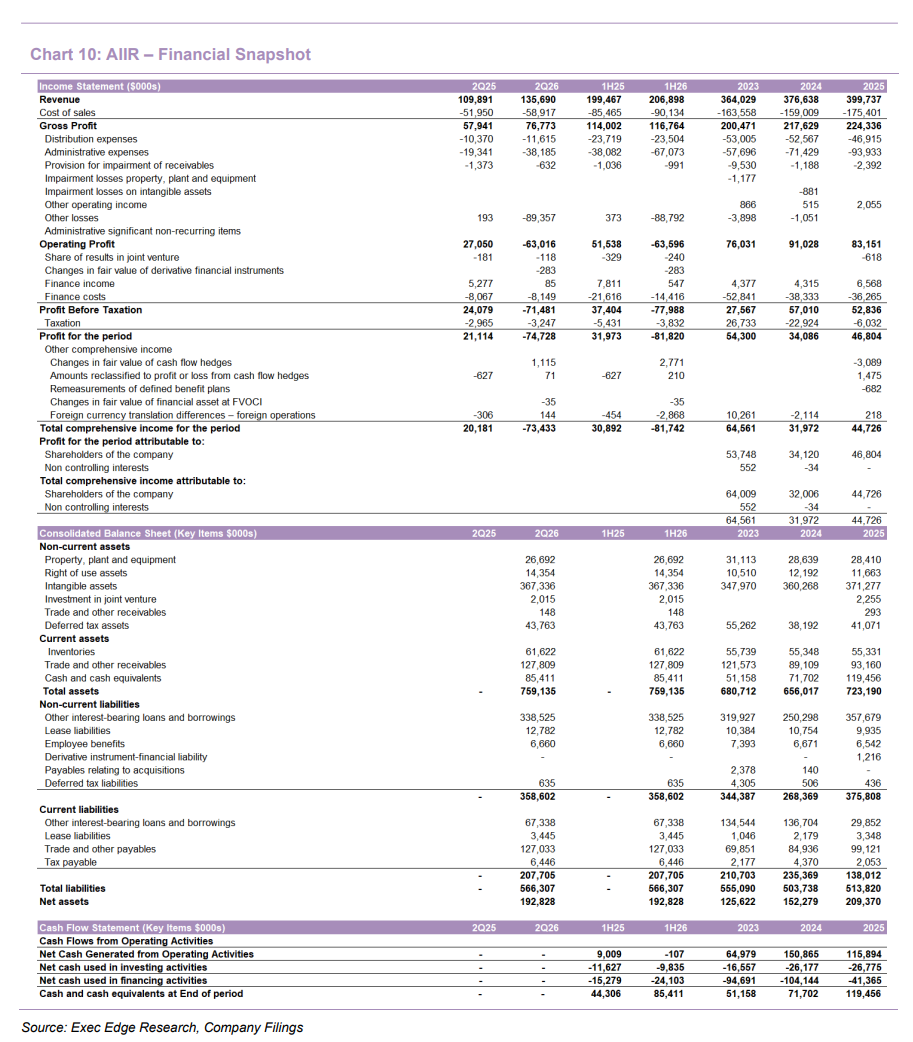
- Reported earnings were impacted by Nasdaq listing-related charges, while underlying operating profitability remained substantially more stable. Reported EBITDA was a loss of $52.1 million versus positive $61.0 million in 1H25, while net loss was $81.8 million versus $32.0 million of profit and EPS was $(0.57) versus $0.22. The gap to $71.7 million of adjusted EBITDA was driven primarily by $48.2 million related to equity issued at listing, $47.7 million of listing-related cash expenses and $12.4 million of share-based compensation, with smaller adjustments for public-company readiness, supply-chain disruption and accelerated PMTA spending. Listing-associated costs totaled approximately $103 million and account for most of the 1H impact, while share-based compensation will continue through remaining vesting periods and some incremental public-company costs will remain in the ongoing expense base. PMTA spending is expected to step down materially in 2027, helping narrow the gap between reported and underlying earnings over time.
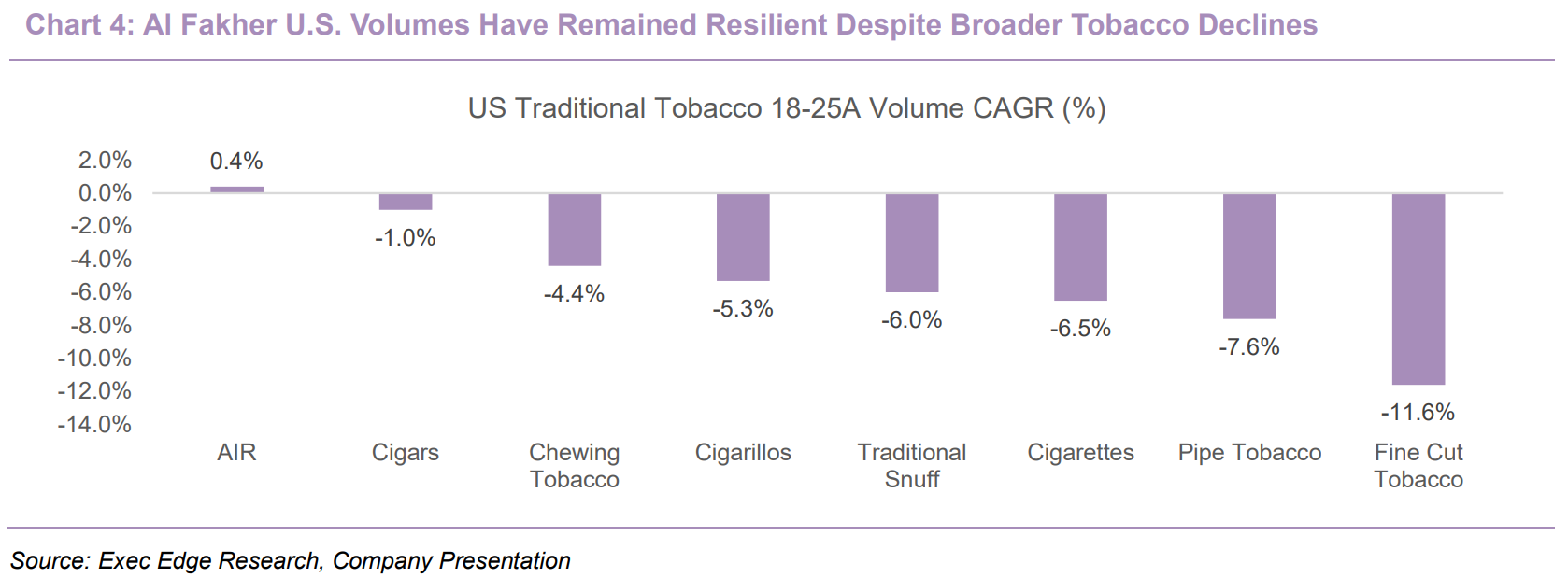
- NGC is beginning to build an additive growth layer alongside the resilient core. Revenue increased 37.5% y/y to $2.2 million from $1.6 million, supported by OOKA and the European Crown Switch rollout, while adjusted EBITDA loss improved to $7.9 million from $9.3 million. At only ~1% of consolidated revenue, NGC remains immaterial to current group revenue, although the $7.9 million adjusted EBITDA loss remains a drag on group profitability. Importantly, management sees effectively no cannibalization from NGCs, with Al Fakher U.S. shipment volumes remaining resilient from 2018-25 even as vape volumes increased ~3x and nicotine pouch volumes ~40x. This gives AIIR a differentiated growth setup versus traditional tobacco companies, as Crown Switch, OOKA and other NGC platforms can add revenue without needing to offset structural decline in the core business. OOKA remains a longer-duration premiumization lever within the existing shisha occasion, with management expecting gradual adoption through the medium term and launch-market economics indicating ~20x revenue and ~15x gross profit per kilogram versus traditional molasses.
- Crown Switch has emerged as the principal near-term NGC catalyst, while the Greentank investment adds strategic value across technology, regulation and supply assurance. AIIR invested $20 million in Greentank at a $170 million pre-money valuation and secured an option to acquire an additional 20% over the next 24 months at a $250 million valuation, alongside board representation, enhanced commercial terms and long-term technology and supply access. Preliminary testing of planned U.S. Crown Switch variants showed formaldehyde approximately 94% lower and nickel approximately 97% lower than selected FDA-authorized comparators, providing a potential differentiation point subject to regulatory validation. AIIR expects to submit its U.S. PMTA later in 2026, while management indicated that a 6 to 9 month framework could be a reasonable guide around the regulatory and launch process rather than a firm timetable. Commercialization will initially be geographically targeted, allowing AIIR to build route-to-market capability and test consumer response before committing to broader national deployment. AIIR will also leverage an existing franchise reaching ~14 million consumers and owned digital assets including Hookah.com and Shisha-World, which should lower the burden of building awareness and distribution from scratch as new products scale.
- Nicotine pouches remain an exploratory growth vector, with broader investment dependent on proving route-to-market economics. AIIR is conducting targeted launches in selected U.S. and Spanish geographies to test messaging, consumer trial and distribution before committing to broader deployment. Saudi Arabia could become attractive given Al Fakher’s brand strength, although management noted that the market currently operates effectively as a monopoly and remains closed to external brands.
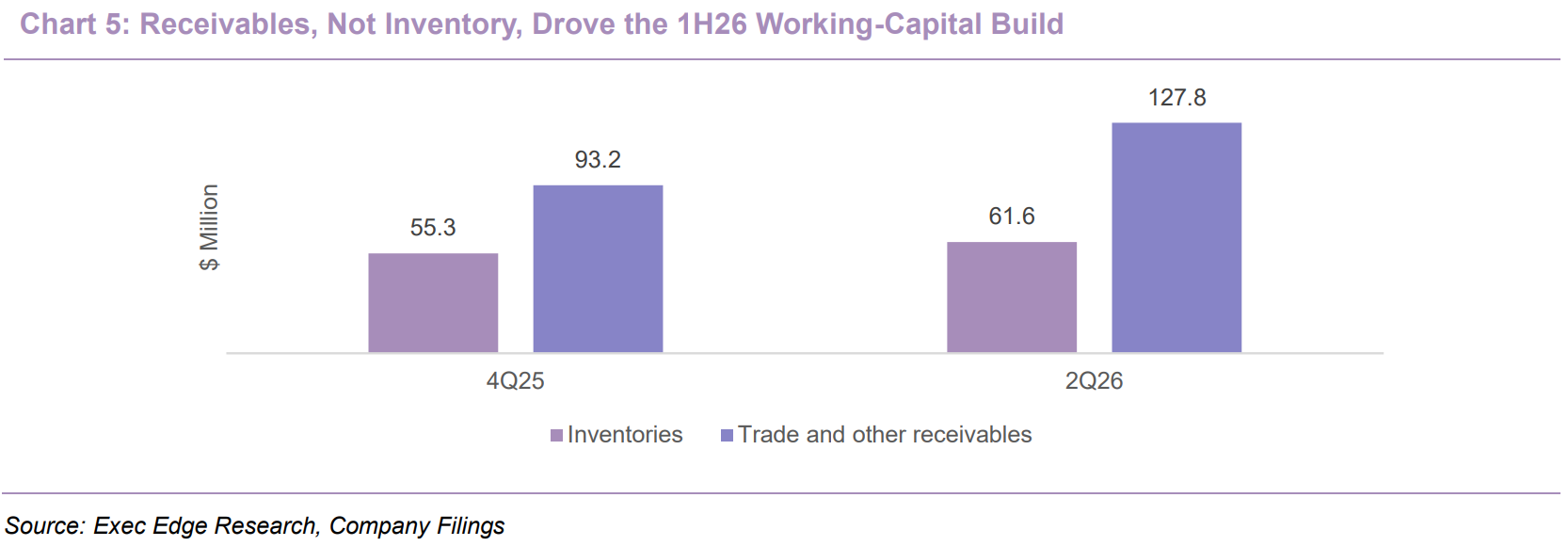
- First-half cash conversion was held back by working capital, primarily due to shipment timing and a sharp receivables build. Cash used in operating activities was $0.1 million in 1H26 versus $9.0 million generated in 1H25 despite $71.7 million of adjusted EBITDA, as trade and other receivables absorbed $58.8 million of cash, inventories used $3.8 million and higher trade and other payables contributed $9.1 million. Current receivables increased to $127.8 million from $93.2 million at 2025-end, while inventories rose only $6.3 million to $61.6 million from $55.3 million and trade and other payables increased to $127.0 million from $99.1 million. Management expects working capital to normalize as shipment cadence improves in 2H, which should support a meaningful recovery in cash conversion after the disruption-heavy first half. For context, 2025 operating cash flow of $115.9 million represented approximately 83% of adjusted EBITDA.
- Balance-sheet flexibility remains intact despite sizable listing-related and strategic cash outflows. Cash declined to $85.4 million at June 30 from $119.5 million at 2025-end, while total borrowings stood at $430.2 million and net debt at $344.8 million, equivalent to 2.48x LTM adjusted EBITDA. First-half outflows included $28.9 million related to reorganization transactions, $13.4 million of interest paid, approximately $5.3 million of combined property, plant and intangible investment and $5.0 million of acquisition payments. Management expects year-end leverage to remain broadly stable versus 2025 after absorbing listing costs and the Greentank investment, before deleveraging resumes over the medium term.
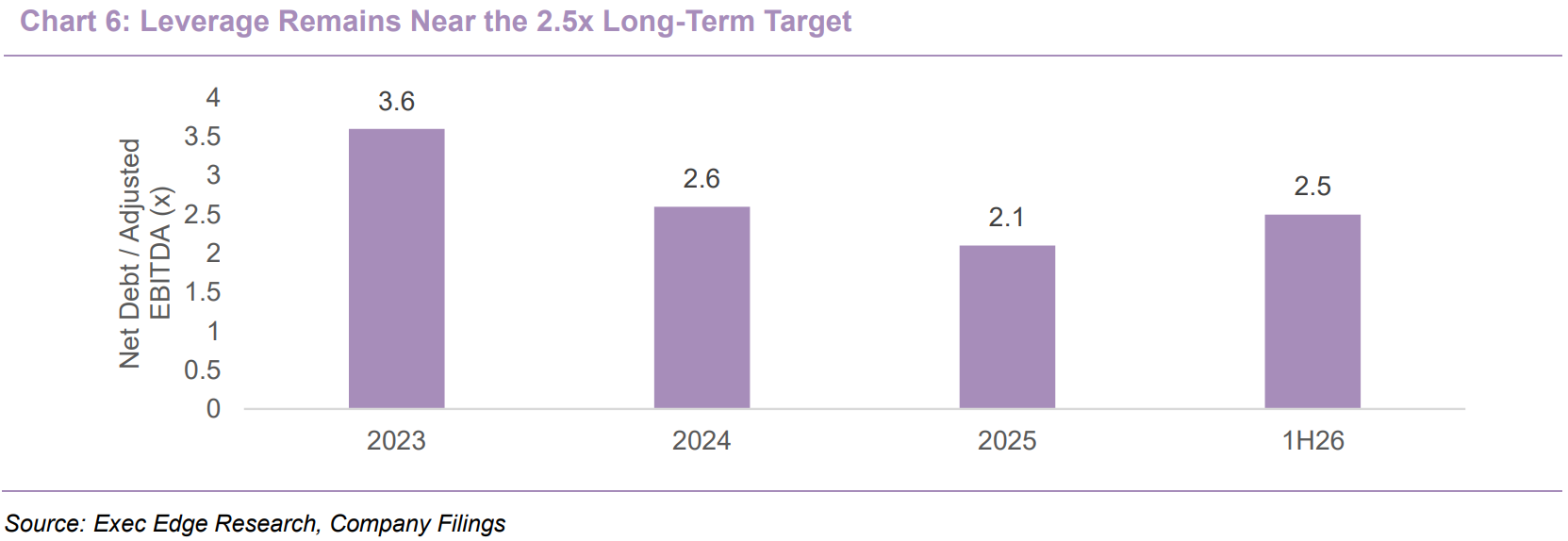
- The capital-light model is increasingly creating optionality for shareholder returns as near-term cash demands normalize. 2026 capex is expected at $15-$18 million and the effective tax rate at approximately 15%, while no buybacks are currently included in 2026 or medium-term guidance. Management has also identified ordinary dividends and special dividends as potential future distribution mechanisms and explicitly indicated that it does not intend to accumulate excess capital indefinitely. With leverage already at approximately 2.5x and normalized cash conversion historically strong, capital allocation should increasingly balance continued deleveraging, selective NGC investment and potential shareholder returns.
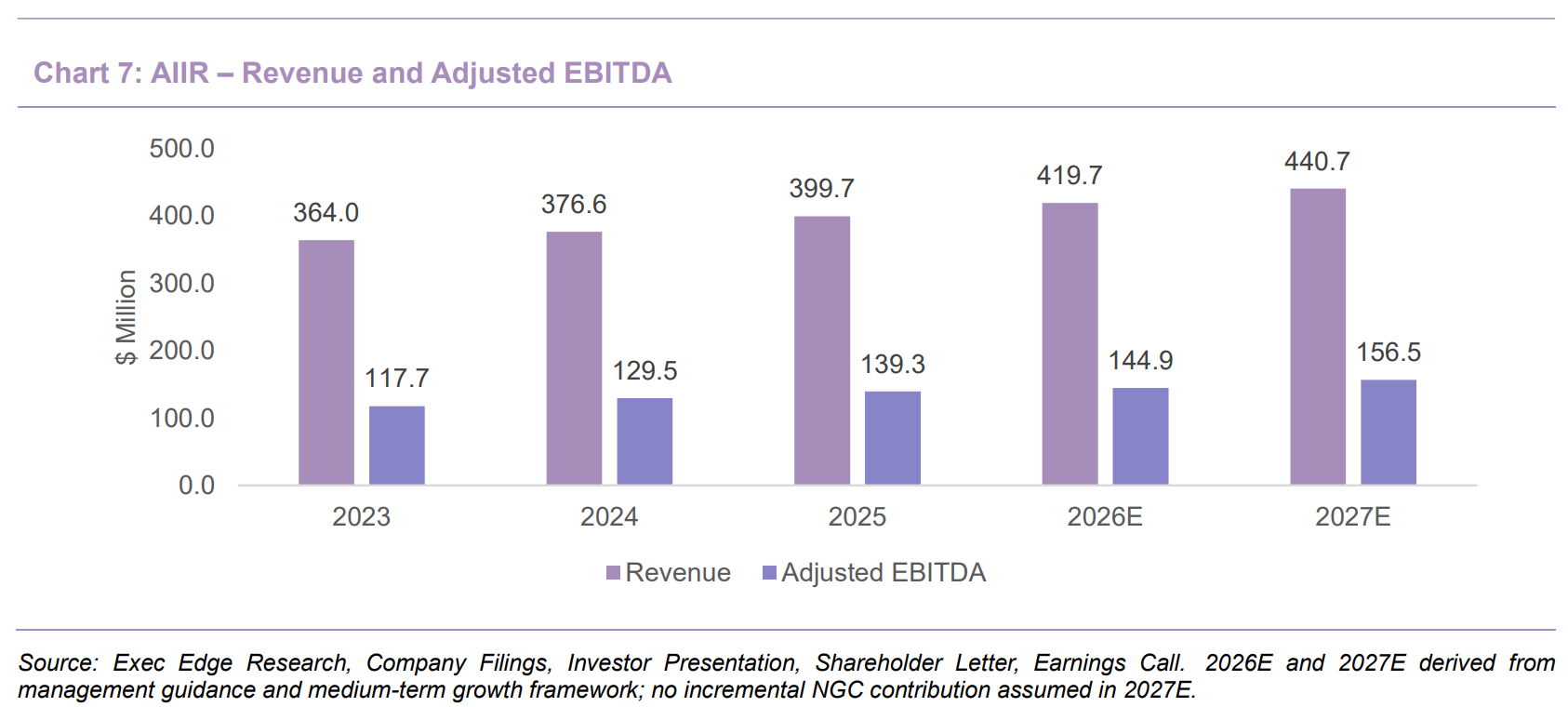
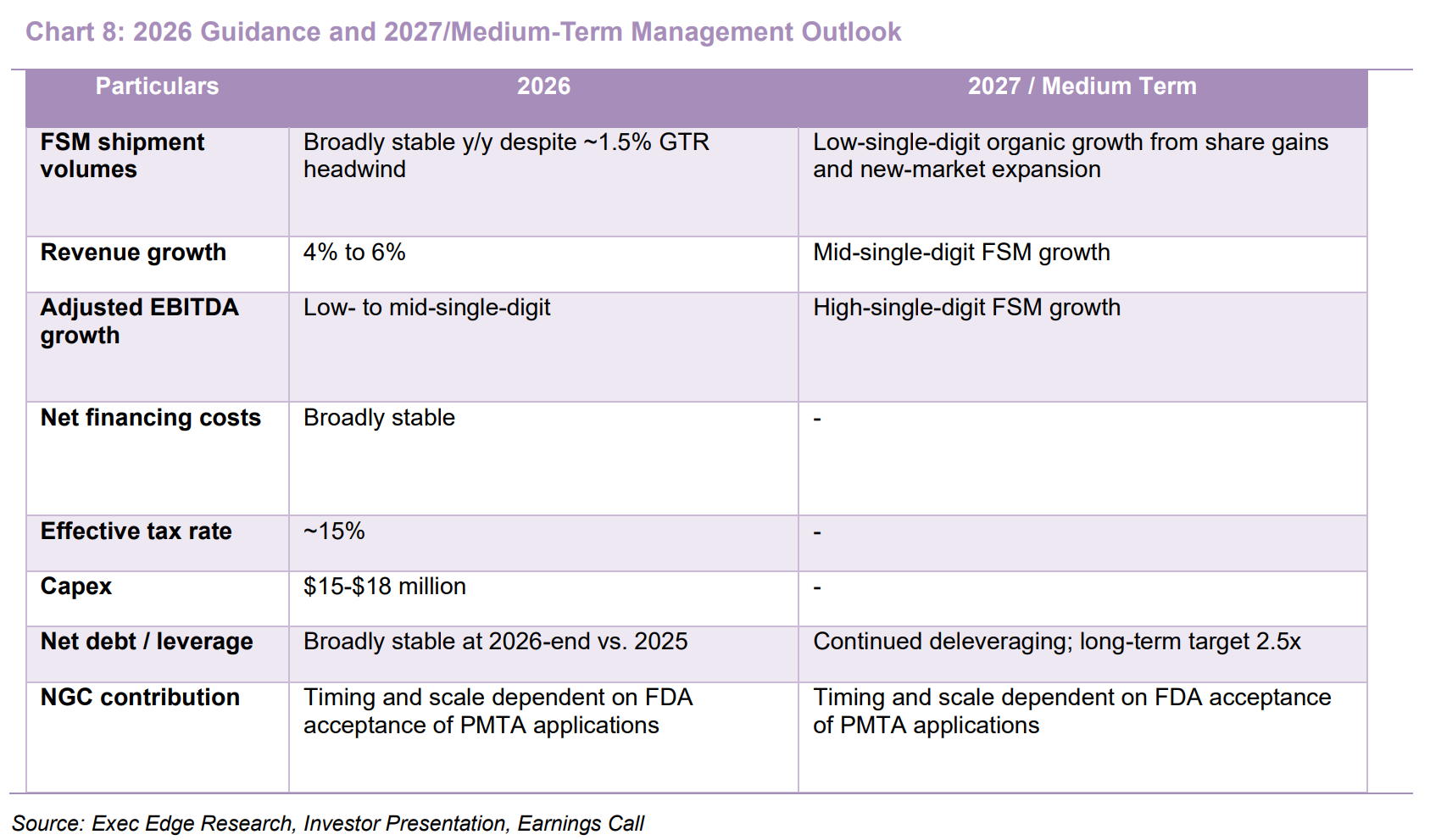
- 2H26 should mark a shift back toward volume-led growth as supply normalization, channel replenishment and geographic mix replace exceptional 1H pricing as the primary drivers. 2026 FSM shipment volumes are expected to be broadly stable y/y despite an approximately 1.5% GTR headwind, requiring a meaningful rebound after the 9.0% 1H decline. In contrast, price/mix should moderate materially from the 14.0% achieved in 1H as prior-year comparisons become tougher and shipments normalize into lower-ASP markets. The earnings setup therefore shifts from pricing-led resilience in 1H toward volume recovery in 2H, supported by intact purchase orders, depleted channel inventory and improved shipment availability. Management guides to 4%-6% 2026 revenue growth and low-to-mid-single-digit adjusted EBITDA growth. Based on the midpoint of the revenue range and 4% EBITDA growth within that outlook, 2026 revenue can be estimated at approximately $419.7 million and adjusted EBITDA at $144.9 million. This implies 2H revenue of approximately $212.8 million, +6% y/y, and adjusted EBITDA of approximately $73.1 million, +8%. EBITDA growth remains below AIIR’s historical high-single-digit trajectory due to incremental public-company costs, factory-footprint reorganization and elevated logistics/raw-material expenses, partly offset by U.S. tariff refunds and excise-duty drawbacks; management also indicated that some macro conservatism is embedded in the topline outlook. Net financing costs are expected to remain broadly stable in 2026.
- 2027 should reflect a more normalized growth and earnings profile, with volume, pricing and premiumization contributing more evenly as temporary 2026 cost pressures recede. Based on management’s medium-term framework, 2027 revenue can be estimated at approximately $440.7 million, +5.0% y/y, and adjusted EBITDA at approximately $156.5 million, +8.0%, with no incremental NGC contribution assumed. The growth rates are consistent with guidance for low-single-digit organic FSM shipment growth, mid-single-digit FSM revenue growth and high-single-digit FSM adjusted EBITDA growth. The core earnings progression is therefore supported by continued share gains and new-market expansion, normalized pricing, premiumization and easing disruption-related costs rather than any required step-up from NGC. Any meaningful Crown Switch or broader NGC contribution would therefore represent upside to these figures and remains dependent on FDA acceptance of PMTA applications. Management also expects continued deleveraging, while lower PMTA spending and normalization of 2026 disruption-related costs should support a cleaner earnings and cash-flow profile.
Valuation Anchored by Core Earnings, with Upside from Normalization and NGC Optionality
- Disclaimer: Exec Edge does not publish proprietary estimates, ratings, price targets, or investment recommendations. The valuation discussion below is illustrative only and is based on company filings, management commentary, and third-party data and estimates. It does not constitute a recommendation, price target, rating, or prediction of future pricing.
- The valuation thesis remains anchored in the resilience and cash-generation potential of the core FSM franchise, with additional upside from normalization and NGC optionality. AIIR continues to demonstrate strong pricing power, leading market shares and resilient end demand, while the 1H26 disruption appears to have delayed shipments rather than impaired the underlying franchise. With volumes recovering, temporary supply-chain and listing-related costs expected to ease, and medium-term growth supported by share gains, premiumization and new-market expansion, the earnings profile should normalize without requiring a meaningful contribution from NGCs. Crown Switch and other NGC initiatives, continued deleveraging and potential shareholder returns therefore represent incremental sources of value creation rather than assumptions required to support the core valuation case.
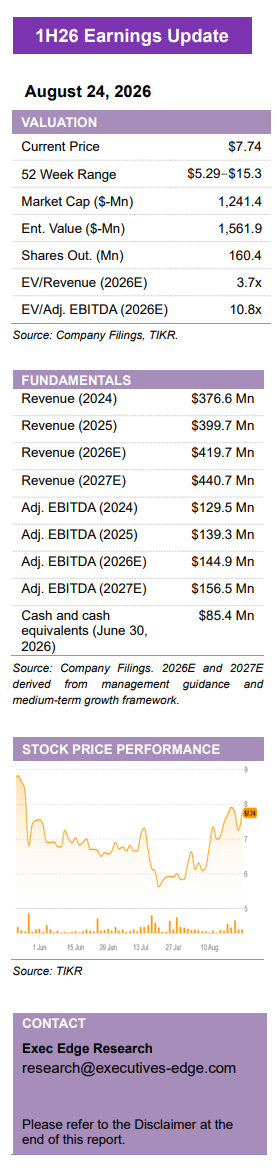
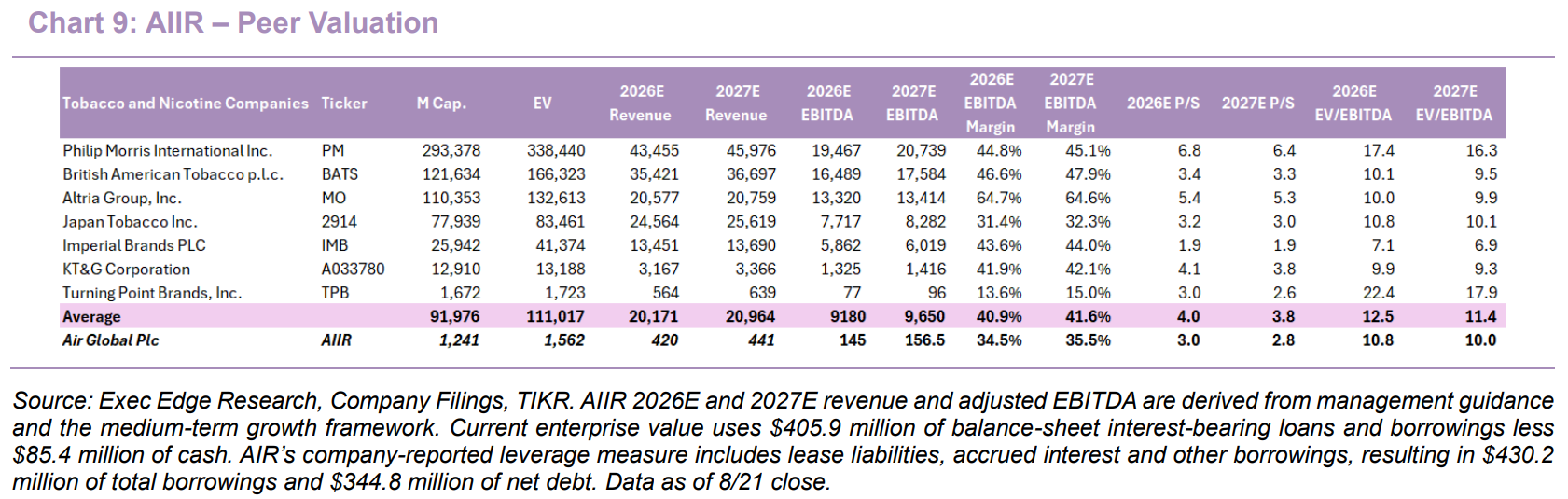
- AIIR now trades materially below the SPAC transaction valuation, providing a more attractive entry point as earnings normalize. As of the 8/21 close, AIIR has a market capitalization of approximately $1.24 billion and enterprise value of approximately $1.56 billion, well below the $1.75 billion transaction EV. Based on management-guidance-derived 2026 revenue of $419.7 million and adjusted EBITDA of $144.9 million, increasing to $440.7 million and $156.5 million, respectively, in 2027, AIIR trades at approximately 3.7x 2026E EV/Sales and 10.8x EV/EBITDA, declining to 3.5x and 10.0x in 2027E. The forward earnings progression requires only modest margin expansion, with adjusted EBITDA margin increasing from approximately 34.5% in 2026E to 35.5% in 2027E.
- The discount to tobacco and nicotine peers appears meaningful relative to AIIR’s forward growth profile. On 2026E figures, AIIR trades at approximately 3.0x P/S and 10.8x EV/EBITDA versus peer averages of 4.0x and 12.5x, respectively. On 2027E, the multiples decline to approximately 2.8x and 10.0x versus peer averages of 3.8x and 11.4x. This implies an approximately 14% discount to peers on forward EV/EBITDA, despite AIIR’s expected ~5% revenue growth and ~8% adjusted EBITDA growth in 2027 comparing favorably with peer-average growth of approximately 4% and 5%. Some discount is warranted given AIIR’s lower 2026E adjusted EBITDA margin of 34.5% versus the 40.9% peer average, but the current valuation does not appear to fully reflect the combination of core earnings resilience, improving growth and NGC optionality.
- Value creation should increasingly be driven by execution against visible operating and strategic catalysts. Near-term catalysts include successful 2H shipment recovery following the 9.0% 1H decline, normalization of working capital and cash conversion, continued U.S. and Saudi share gains, and improving European profitability as shipment timing normalizes. Beyond 2026, continued deleveraging and potential shareholder returns should strengthen the equity story, while Crown Switch PMTA acceptance and subsequent U.S. commercialization would provide incremental upside not assumed in the 2027E figures derived from management’s FSM growth framework. Delivery against these milestones should support a narrowing of the current discount to peers and the prior transaction valuation, while weaker shipment recovery, persistent cash absorption or higher NGC investment without commercial traction would justify a continued discount.
Read Exec Edge’s Initiation on AIR Global PLC Here
Download the Complete Report Here
Subscribe to our Weekly Newsletter to Receive All Research
Contact: